
Are Professional Digital Scales Worth It for Herbs?
Last Updated: November 13, 2026
Quick Summary
A professional digital scale for herbs delivers accuracy at small amounts, consistency across sessions, and less guesswork, turning an approximate process into a repeatable one. Finer readability resolves small quantities that a whole-gram kitchen scale rounds into a guess, and you can record a weight and hit it again next week.
- Weighing beats scooping because dried herbs vary in density, so identical-looking scoops can differ in mass.
- Capacity is the maximum weight a scale handles; readability is the smallest increment it displays.
- The UF200H is a compact pocket scale with 200 g capacity and 0.01 g accuracy.
- Verify with a reference weight before sessions where you record weights, and recalibrate after moving or dropping the scale.
- The tare function zeroes out your container so the display shows only the herb.
Table of Contents
- Why Weigh Herbs Instead of Scooping Them
- Benefits of Using a Professional Digital Scale for Herbs
- Digital Scale Capacity and Readability: Picking the Right Specs
- How to Calibrate a Digital Scale for Reliable Readings
- Using the Tare Function on a Digital Scale
- Cleaning and Maintaining a Digital Scale
- Professional vs. Consumer Scales: What You Pay For
- Choosing the Right Scale at Bay Roberts Vape and Glass Shop
- Frequently Asked Questions
Why Weigh Herbs Instead of Scooping Them
Weighing herbs with a digital scale for herbs beats scooping because weight measures the actual amount of material, while a spoon measures volume.
Here is what most guides miss: volume measurement is only reliable when the material is uniform. Dried leaf, ground powder, and stem-heavy blends all pack differently.
A common question for anyone buying a first scale is whether it is really worth it over a measuring spoon.
Benefits of Using a Professional Digital Scale for Herbs
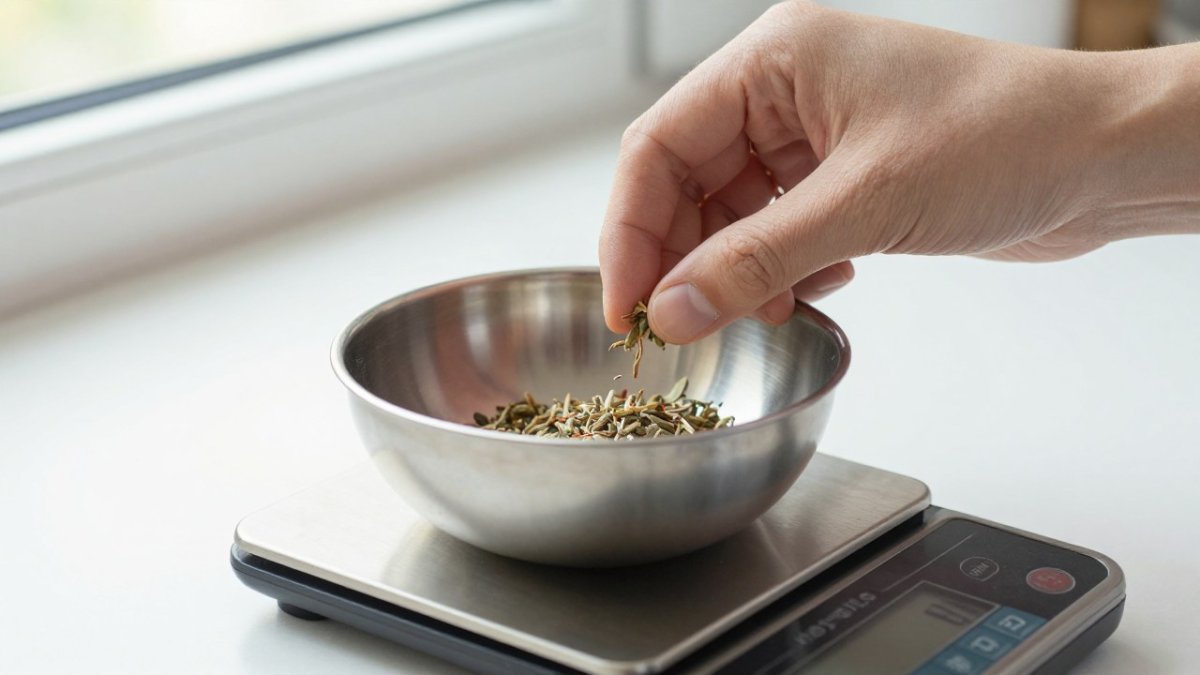
The benefits of using a professional digital scale for herbs come down to three things: accuracy at small amounts, consistency across sessions, and less guesswork. A good scale turns an approximate process into a repeatable one. That matters most when you are working with small quantities where a small error is a large proportion of the total.
Accuracy That Holds Up in Small Batches
Small batches expose error fast. A kitchen scale with whole-gram readability cannot resolve the difference between a little and a lot when the total is only a few grams. A professional-grade scale with finer resolution gives you a usable reading instead of a rounded guess. The practical result: you can repeat a small batch precisely rather than adjusting by feel.
Consistency From One Session to the Next
Consistency is a benefit worth considering. A scale lets you record a number and hit it again next week. That turns a recipe into something you can actually reproduce. Scooping, by contrast, drifts with the material, the grind, and even how settled the herb is in its container.
Digital Scale Capacity and Readability: Picking the Right Specs
Capacity and readability are the two specs that decide whether a scale suits herb work. Capacity is the maximum weight the scale handles; readability is the smallest increment it displays. You want the smallest capacity that comfortably covers your largest load, paired with the finest readability your budget allows.
| Spec | What It Means | Why It Matters for Herbs |
|---|---|---|
| Capacity | Maximum weight the scale handles | Must exceed your largest single load with margin |
| Readability | Smallest displayed increment | Finer increments resolve small quantities |
| Resolution | Internal step the sensor reads | Supports stable, repeatable readings |
| Units | Grams, ounces, grains | Conversion without mental math |
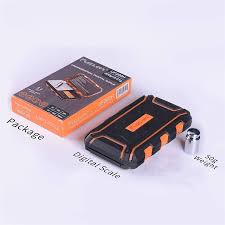
For small herb quantities, a compact pocket scale with fine readability is usually the right call. The Digital Scales with Double Digits UF200H is a compact pocket scale with a 200 g capacity and 0.01 g accuracy, suited to small ingredient loads.
How to Calibrate a Digital Scale for Reliable Readings
Calibrating a digital scale means resetting its internal reference against a known weight so the display matches reality. Most scales ship with a calibration procedure in the manual, and skipping it can lead to unreliable readings.
The general process:
- Place the scale on a flat, stable surface away from drafts and vents.
- Turn it on and let it settle to zero.
- Enter calibration mode as described in your manual.
- Place the specified calibration weight on the platform.
- Wait for the display to confirm, then remove the weight.
Watch out: using a household item as a calibration weight introduces error, because you are calibrating against something whose true mass you do not know. Use a proper calibration weight or follow the manufacturer's stated method.
Verification: The Step Most Guides Skip
Calibration is only half the job. Verification tells you whether the scale still reads correctly after calibration, and it is the step that catches drift before it ruins a batch.
A common pattern is to verify at two points: one near the low end of your typical herb load (for example, 5 g) and one near the high end (for example, 50 g). This catches linearity errors that a single-point check misses. For small herb quantities, the low-end check matters most because that is where readability and stability are hardest to maintain.
Recognizing Drift and Environmental Error
Drift is a slow change in readings over time, and it is usually environmental rather than a fault. Temperature swings, humidity, and air currents all affect the sensor. A scale that reads correctly in the morning can wander by afternoon if it sits near a window or a heat source.
For herb work, moisture is the quiet culprit. Dried herbs absorb and release moisture with the room, so the same herb can weigh differently on a humid day.
Herb-Specific Calibration Habits
- Verify with a reference weight before any session where you will record weights for later reproduction.
- Recalibrate after moving the scale, after a drop, or after any significant temperature change.
- Keep the calibration weight clean and store it with the scale so verification is never skipped for lack of a weight.
A scale that passes verification at your working range is trustworthy for herb measurement. A scale that fails verification is a source of silent error, and no amount of careful scooping will compensate for it.
Using the Tare Function on a Digital Scale
The tare function on a digital scale zeroes out the weight of a container so the display shows only the contents.
This is the single most useful feature for herb work, because it lets you weigh directly into the container you will store the material in.
If your scale has a backlit display and multiple units, tare pairs well with unit switching: zero the container in grams, then switch to ounces if a reference uses them.
Cleaning and Maintaining a Digital Scale
Cleaning and maintaining a digital scale is mostly about keeping moisture and debris out of the sensor housing. Wipe the platform and bowl with a soft, slightly damp cloth, then dry immediately. Never rinse the body or submerge it, and never use solvent cleaners on the display.
- Remove the bowl or platform where the design allows, and wash only that part if the manual permits.
- Store the scale flat, away from heat and humidity.
- Remove batteries if the scale will sit unused for a long stretch.
A common mistake is storing a scale in a humid spot, then wondering why readings wander. Scale drift can be caused by environmental factors.
Professional vs. Consumer Scales: What You Pay For
The difference between a professional scale and a basic consumer scale is resolution, stability, and build quality, not brand prestige. A consumer kitchen scale often reads to the whole gram; a professional or prosumer model reads to 0.01 g and holds that reading steady.
Where it matters: small quantities, repeated batches, and any workflow where you record and reproduce weights. Where it does not: rough, large-volume measuring where a gram either way is irrelevant.
What Makes a Scale Professional-Grade
Professional-grade is a set of measurable behaviors, not a label. Look for these criteria:
- Readability and resolution: A display increment fine enough for your smallest load, backed by an internal resolution that supports stable readings rather than a jumping last digit.
- Repeatability: The same weight placed on the platform multiple times returns the same reading within one increment. This is the single most useful test you can run in a store or at home.
- Linearity: Accuracy holds across the range, not just at one calibration point. A scale that is accurate at 50 g but off at 5 g is not suitable for small herb quantities.
Repeatability: The Test That Separates Them
Repeatability is where consumer and professional models diverge most in practice. Place the same reference weight on the platform five times in a row, zeroing between placements. A professional-grade scale returns the same reading each time, within one increment. A basic consumer scale may vary by two or three increments, which is enough to make small herb batches irreproducible. This test takes a minute and tells you more than any spec sheet.
Total Cost and Buying Criteria
Price alone is a poor guide because the cost of a scale includes the calibration weight, the batteries, and the time lost to unreliable readings. A practical checklist for herb work:
- Readability fine enough for your smallest typical load (0.01 g for small quantities, 0.1 g for larger batches).
- Capacity that exceeds your largest load with margin, without sacrificing readability.
- Platform or bowl size that holds your container securely.
- Tare function, unit switching, and a backlit display for dim workspaces.
You can get expert guidance in-store to help match a scale to how you work. Our team is available to help you match a scale to how you work.
Choosing the Right Scale at Bay Roberts Vape and Glass Shop
Picking the right scale starts with one question: what is the smallest amount you need to weigh, and what is the largest?
Our current lineup covers both paths:
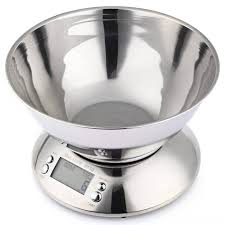
- Professional Digital Scale (Kitchen), $49.99: a metal kitchen scale with a removable stainless steel bowl, built for durability and accurate weighing. Best for larger herb batches weighed into a bowl.
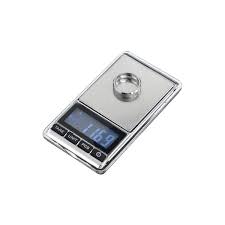
- Digital Scales, $24.00: pocket models with fine accuracy, a tare function, a backlit display, and multiple units. Best for small quantities and portability.
- Digital Scales with Double Digits UF200H, $27.99: a compact pocket scale with 200 g capacity and 0.01 g accuracy. Best for precise small-item weighing.
If you are deciding where to buy, our local selection and expert guidance is the reason most customers choose to visit rather than order blind.
Weighing herbs accurately is a small habit with an outsized effect on consistency, and the right scale makes it effortless.
Frequently Asked Questions
What are the benefits of using a digital scale for herbs?
A digital scale for herbs replaces volume scoops with weight-based measurement, which removes the guesswork that comes from how tightly or loosely herbs settle. You get the same amount every time, which matters for repeatable batches. It also cuts waste because you weigh only what you need instead of over-scooping and discarding the extra. Models with a tare function let you weigh herbs directly in a container, and a backlit display makes small readings easy to see.
How accurate should a digital scale for herbs be?
Match readability to the smallest amount you weigh. For pinches and small test batches, a pocket scale with 0.01 g resolution is the practical choice, such as the Fuzion UF200H at $27.99 with its 200 g capacity and 0.01 g accuracy. For larger batches where you weigh tens of grams at a time, a 0.1 g or whole-gram kitchen scale is fine. A scale that rounds too coarsely will hide the small differences that matter when you are dialing in a batch.
How do you calibrate a digital scale?
Calibration checks the scale against a known weight so the display stays honest. Turn the scale on, let it settle, and use a calibration weight that matches your model's instructions, usually a fraction of its capacity. If the reading drifts from the stated weight, follow the calibration procedure in the manual. Scales without a user calibration mode can still be verified with a known weight; if the reading is off, replace the scale rather than trusting it. Recheck after moving the scale or changing batteries.
Why is the tare function useful when weighing herbs?
The tare function on a digital scale zeroes out the container so only the herbs are counted. Place your bowl or tray on the platform, press tare, and the display resets to zero. Add herbs until you hit your target weight, and you never have to subtract the container weight by hand. It also lets you add several ingredients in sequence to the same container, taring between each one, which keeps a batch moving without extra dishes.
Prices of digital scale options
