
How to Choose Nicotine Strength for Vaping
Table of Contents
- Understanding Nicotine Strength for Vaping
- Nicotine Strength for Heavy Smokers
- Vape Nicotine Strength Chart and Dosing Guidelines
- Nicotine Salts vs Freebase Nicotine
- How to Reduce Nicotine in Vaping Over Time
- Matching Nicotine Strength to Your Device Type
- Signs Your Nicotine Strength Is Wrong
- Frequently Asked Questions
Last Updated: October 7, 2026
Understanding Nicotine Strength for Vaping
How to choose nicotine strength for vaping depends on your smoking history, device type, and tolerance. Get it right and you transition smoothly from cigarettes; get it wrong and frustration sends you back to smoking.
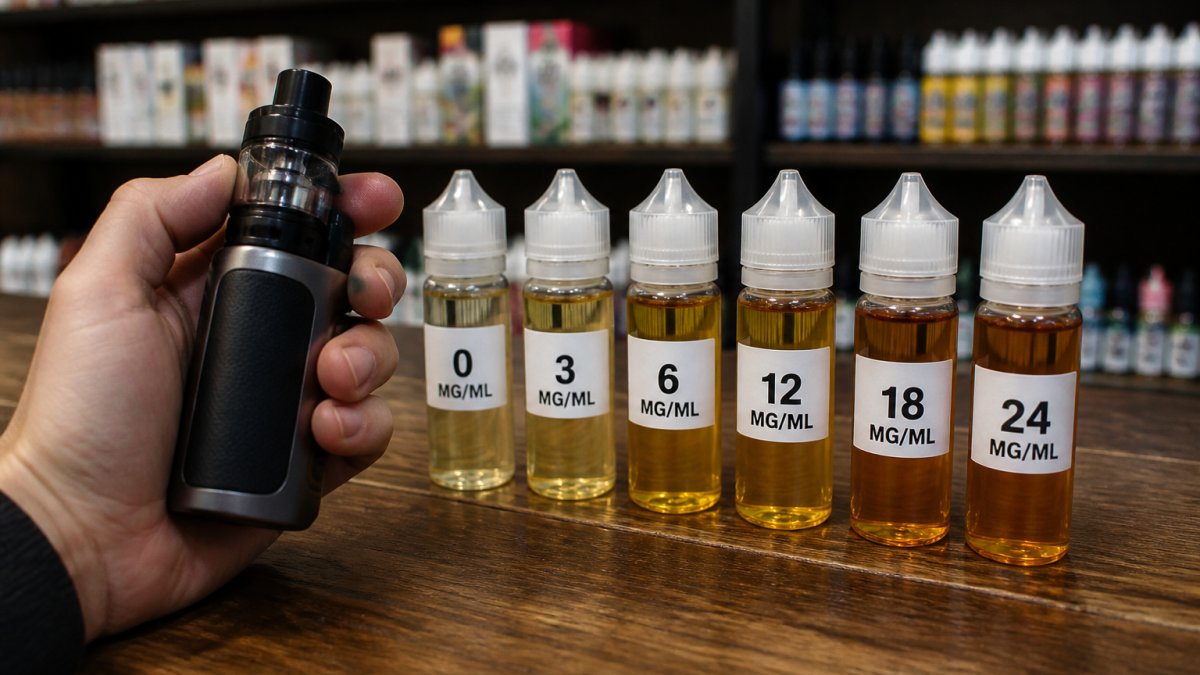
Too low and you chain vape or quit; too high and harsh throat hits and nausea feel nothing like smoking.
Nicotine strength is measured in milligrams per milliliter (mg/mL), from 0mg to 50mg (high-strength salt nicotine). Match it to three factors: how much you smoked, your device, and whether you use freebase or nicotine salt e-liquid.

Nicotine Strength for Heavy Smokers
Heavy smokers (one pack daily or more) typically need 20-50mg to feel satisfied. If you smoked a pack a day, your body expects a specific amount of nicotine per inhalation, a light vape at 6mg won't deliver it, no matter how much you inhale.
Start at 20mg in a pod system or smaller refillable device. These use a mouth-to-lung inhale that mimics cigarettes, hitting your mouth and throat before your lungs, many heavy smokers find 20mg delivers the right throat hit and satisfaction.
If 20mg feels too weak after a week, move to 30mg or the "Bold 50" strength options like those available in Chill Salt e-liquids. These high-strength nicotine salts absorb faster into your bloodstream, giving you the rapid satisfaction your body craves from cigarettes. Test at one strength for at least five days before adjusting.

Vape Nicotine Strength Chart and Dosing Guidelines
| Smoking History | Recommended Strength | Device Type | Inhale Style |
|---|---|---|---|
| Non-smoker / Quit years ago | 0-3mg | Any | Any |
| Light smoker (1-5 per day) | 3-6mg | Mod or pod | Direct-to-lung or mouth-to-lung |
| Moderate smoker (5-15 per day) | 6-12mg | Mod or pod | Mouth-to-lung preferred |
| Heavy smoker (15-25 per day) | 12-20mg | Pod system | Mouth-to-lung |
| Very heavy smoker (25+ per day) | 20-50mg | Pod system | Mouth-to-lung |
This chart is a starting point, not a rule.
The dosing principle is simple: inhale until satisfied, then stop. With cigarettes you smoked until the cigarette was gone; with vaping you control your intake. There's no "correct" number of puffs, just reach the nicotine level your body expects.
Nicotine Salts vs Freebase Nicotine
Nicotine salts and freebase nicotine are two chemical forms, and the difference changes how you think about nicotine strength.
Freebase nicotine is the standard form in most e-liquids. It works well at lower strengths (0-12mg). A 12mg freebase liquid feels smooth; a 50mg freebase liquid would be unsmokable.
Nicotine salts are a modified form. You can use much higher strengths without the harsh throat hit, a 50mg salt feels smoother than a 12mg freebase.
The trade-off: nicotine salts work best in low-wattage pod systems (under 15 watts) with tight airflow for a mouth-to-lung inhale. Freebase works in any device, from small pods to large mods, but needs lower strength to avoid harsh throat hits.
For how to choose nicotine strength for vaping as a heavy smoker, nicotine salts are usually the better choice. They deliver satisfaction faster, they're smoother at high strength, and they work in the smaller, simpler devices that most new vapers prefer. Bay Roberts Vape and Glass Shop stocks nicotine salt options like Salt Iced Up 30ML e-liquid and Salt Juiced Up 30ML e-liquid in strengths from 0mg to 50mg, so you can find exactly what works for your transition.

How to Reduce Nicotine in Vaping Over Time
Once you've settled into vaping and broken the smoking habit, many people want to gradually lower their nicotine strength. But the psychological habit is often harder to break than the chemical one.
Stay at your current strength for at least two weeks after quitting cigarettes. After two weeks, if you feel stable and satisfied, drop one level: 20mg to 12mg, or 12mg to 6mg.
Move slowly: drop one strength level and stay there a full week. If you feel irritable, anxious, or constantly reach for your vape, go back up and wait another week.
A practical tapering method: mix half a bottle of 12mg with half a bottle of 6mg to create an effective 9mg strength, then gradually increase the ratio of lower-strength liquid over a week.
Here's a concrete reduction schedule you can adapt:
| Week | Strength | Mix Ratio (if tapering) | Goal |
|---|---|---|---|
| 1-2 | Current strength | 100% current | Stabilize off cigarettes |
| 3 | Next level down | 75% current + 25% lower | Test lower strength |
| 4 | Next level down | 50% current + 50% lower | Full transition |
| 5 | Next level down | 100% lower | Stabilize |
| 6 | Repeat cycle | , | Continue if ready |
This schedule is a guide, not a rule. Some people need two weeks at each step, others move faster. Listen to your body and don't force a drop before you're ready.
Breaking the psychological habit
Nicotine reduction is only half the battle. The other half is the behavioral addiction: the hand-to-mouth motion, the break ritual, the oral fixation. Lower nicotine but keep vaping constantly and you're still reinforcing the habit loop. Separate the chemical from the behavior.
Try these strategies:
- Delay the first vape of the day. If you normally vape within five minutes of waking, wait 30 minutes.
- Change your routine. If you always vape with coffee, switch to tea for a week. If you vape in the car, leave the device at home on short trips.
- Use a zero-nicotine device for the ritual. Keep a 0mg pod for times when you want the hand-to-mouth action but not the nicotine.
- Track your puffs. Most pod systems don't have puff counters, but you can estimate. If you normally take 100 puffs a day, aim for 90 next week, then 80.
Many vapers never reach 0mg, and that's fine. Some settle at 3-6mg permanently; others enjoy the ritual without nicotine.
Matching Nicotine Strength to Your Device Type
Your device type determines which nicotine strength will work, non-negotiable, and where most new vapers get stuck. Each device type also has its own safety protocols.
Pod systems and vape pens (small, closed-system devices) are designed for 20-50mg nicotine salts.
Safety protocol for pod systems:
- Never use a pod system with a coil resistance below 1.0 ohm if you're using 20mg+ nicotine salts. Sub-ohm coils in a pod device can deliver too much nicotine too quickly.
- Check the pod's wattage range. If it's above 15 watts, use lower nicotine strength (12mg or less).
- Keep the device upright to prevent leaks, which can cause skin exposure to concentrated nicotine.
- Replace pods every 1-2 weeks or when flavor diminishes. A burnt coil can produce harmful compounds.
Refillable pod systems (like UWELL and SMOK devices available at Bay Roberts Vape and Glass Shop) are the sweet spot for most new vapers. They accept both nicotine salts and freebase across a range of strengths; a 12-20mg nicotine salt is ideal, giving satisfaction without the complexity of a large mod.
Safety protocol for refillable pods:
- Use the correct coil for your nicotine strength. Most refillable pods have two coil options: one for salt nicotine (higher resistance, lower wattage) and one for freebase (lower resistance, higher wattage). Using the wrong coil can cause dry hits or excessive nicotine delivery.
- Prime new coils by adding a few drops of e-liquid directly to the cotton before installing.
- Never fill above the max line. Overfilling causes leaks and can flood the coil.
- Clean the pod connection weekly with a dry cloth to prevent e-liquid buildup that can damage the battery.
Sub-ohm mods (larger devices with coils under 1 ohm resistance) are designed for lower nicotine strength (3-6mg freebase). They produce massive vapor clouds and deliver nicotine very efficiently, so high nicotine is overwhelming and causes dizziness and nausea. They suit people who've transitioned away from cigarettes and want to chase flavor and vapor production.
Safety protocol for sub-ohm mods:
- Never use nicotine salts above 6mg in a sub-ohm tank.
- Check your battery's continuous discharge rating (CDR) and ensure it exceeds your mod's maximum wattage draw. Using an underrated battery can cause overheating or venting.
- Use regulated mods with built-in safety features (short-circuit protection, overheat protection, reverse polarity protection). Unregulated mods are for experienced users only.
- Inspect batteries for tears or dents before each use. Damaged wraps can cause short circuits. Rewrap or replace damaged batteries immediately.
- Never leave a sub-ohm mod charging unattended or overnight.
Many new vapers buy a sub-ohm mod because it looks impressive, then choose 20mg nicotine because they were heavy smokers, an unpleasant and potentially unsafe combination. Start with a refillable pod system and 12-20mg nicotine salt, then explore other device types once you're confident you won't return to cigarettes.
Signs Your Nicotine Strength Is Wrong
Too much nicotine shows up quickly: a harsh, painful throat hit, a tightening throat, coughing, dizziness, nausea, or a racing heartbeat. Lower your nicotine strength immediately.
Too little nicotine is subtler. You feel unsatisfied after vaping, take longer and more frequent puffs, and may reach for a cigarette because vaping doesn't feel like enough. You chain vape constantly.
The right nicotine strength feels like a cigarette satisfied you: a few puffs leave you satisfied, your throat feels warm but not painful, and you're not dizzy, nauseous, or constantly reaching for your vape.
If you're uncertain, start lower than you think you need, it's easier to go up in strength than down. If 12mg feels weak after a full week, move to 20mg. But if you start at 50mg and it's too strong, you must wait days for your system to adjust before trying again.
Choosing the right nicotine strength is the foundation of a successful transition from cigarettes to vaping. Start with your smoking history, match it to a device type, and give yourself a full week at each strength before adjusting.
If you're new to vaping and feeling overwhelmed by the options, visit Bay Roberts Vape and Glass Shop in person or browse our selection online. We carry trusted brands like UWELL and SMOK with dozens of refillable device options, so whether you're a first-time vaper or an experienced user looking to fine-tune your setup, we can guide you to exactly what works.
Frequently Asked Questions
What nicotine strength should a beginner start with?
Beginners typically start between 6-12 mg/mL for mouth-to-lung devices or 3-6 mg/mL for direct-to-lung setups. If you smoked a pack or more daily, consider 12-20 mg/mL. Start at the higher end and step down after 2-3 weeks as your body adjusts. Your throat hit and cravings will tell you if the strength is right, if you're still reaching for cigarettes, increase it slightly.
What is the difference between nicotine salts and freebase nicotine?
Nicotine salts absorb faster into your bloodstream and deliver a smoother throat hit at higher strengths (20-50 mg/mL), making them ideal for pod systems and heavy smokers transitioning from cigarettes. Freebase nicotine works best at lower strengths (3-12 mg/mL) in larger devices and produces more visible vapor.
Can you lower your nicotine strength over time?
Yes. Most vapers gradually reduce nicotine strength after 4-8 weeks. Step down by 3-6 mg/mL at a time and monitor for cravings or increased vaping frequency. If you notice yourself vaping more to compensate, the reduction was too steep, go back up slightly.
Is 20 mg/mL nicotine strong in a vape?
20 mg/mL is moderate to strong depending on your device type. In a pod system or mouth-to-lung device, it's standard for heavy smokers. In a sub-ohm or direct-to-lung mod, 20 mg/mL would be very harsh and uncomfortable. Always match nicotine strength to your device's wattage and airflow, higher wattage devices need lower nicotine to avoid nicotine overload.