
How to Clean Glass Water Pipes: Step-by-Step Guide
Table of Contents
- What You'll Need to Clean Glass Water Pipes
- Step-by-Step Cleaning Process for Glass Water Pipes
- The Role of Isopropyl Alcohol in Cleaning
- How Often to Clean a Water Pipe for Optimal Performance
- Best Glass Cleaning Solution for Bongs: Alcohol vs. Alternatives
- How to Remove Resin from Glass Without Damage
- Tips for Hard-to-Reach Areas and Stubborn Stains
- Common Mistakes to Avoid When Cleaning Your Pipe
- Frequently Asked Questions
Last Updated: September 3, 2026
What You'll Need to Clean Glass Water Pipes
Before you start cleaning, gather the right supplies. Having everything ready makes the process faster and more effective.
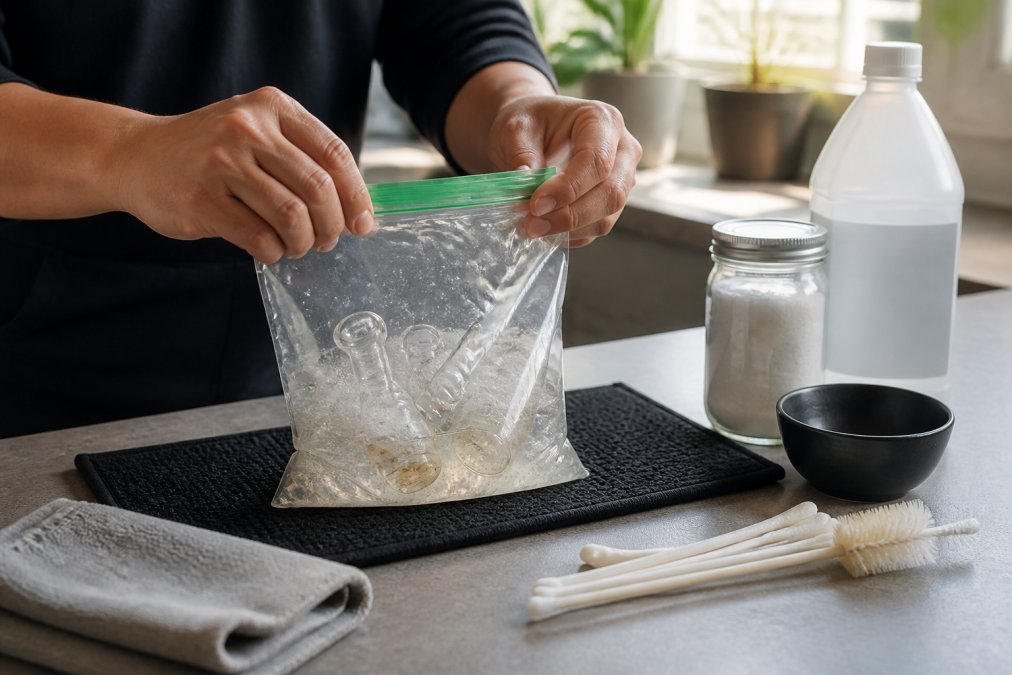
The essentials are isopropyl alcohol (90% concentration or higher works best), coarse salt, and hot water. The alcohol dissolves cannabinoid residue while the salt acts as an abrasive to scrub away stubborn buildup. You'll also need resealable bags large enough to hold your glass pieces, a container for soaking, and something to scrub with.
For scrubbing tools, pipe cleaners are your workhorse. The Big Ben Pipe Cleaners come in a 50-pack and cost just $3.00, making them an affordable option for regular maintenance. If you're dealing with harder-to-reach spots, consider the Randy's Brushes ($3.25) in either 5mm or 8mm sizes, depending on your downstem diameter. For tougher resin buildup, the Magnetic Bong Scrubber at $6.20 offers a unique approach, the magnetic design lets you clean the inside of a bong without fully disassembling it.

Cotton swabs are helpful for detailed work on smaller components like bowl pieces and ash catchers. Paper towels or a clean cloth are essential for drying. If you prefer an alternative to isopropyl alcohol, white vinegar and hot water work, though they're less effective on heavy resin buildup.
At Bay Roberts Vape and Glass Shop, we stock all the cleaning supplies you need in one place. Whether you prefer traditional methods or specialty tools, we can help you find exactly what works for your setup.
Step-by-Step Cleaning Process for Glass Water Pipes
The process itself is straightforward, but following each step carefully prevents damage to your glassware and ensures thorough cleaning.
Step 1: Empty the Bong Water and Remove Components
Start by pouring out any remaining bong water. This water contains ash, residue, and bacteria that will only complicate your cleaning. Rinse the main chamber with hot water to remove loose debris.
Next, disassemble your water pipe completely. Remove the downstem, bowl piece, and any ash catcher or percolator components. These parts collect the most resin buildup, so separating them allows you to clean each piece individually. If your downstem or bowl is particularly gunked up, don't worry, the soaking step will handle that.
Step 2: Soak the Pieces
Place your disassembled components into a resealable bag and pour enough isopropyl alcohol to fully submerge them. Add coarse salt, about a tablespoon per piece is a good starting point. The salt acts as an abrasive without scratching the glass.
Seal the bag and shake it vigorously for 30-60 seconds. You'll see the alcohol turn brown or amber as it dissolves the cannabinoid residue. Let the pieces soak for at least 30 minutes. For heavy resin buildup, soaking for 2-4 hours or even overnight produces better results. The longer soak time gives the isopropyl alcohol more time to break down stubborn deposits.
Step 3: Scrub and Rinse Thoroughly
After soaking, pour the used alcohol and salt into a sink (never down the drain if you can help it, see the disposal section below). Add fresh isopropyl alcohol and salt to your bag, then shake again for another 60 seconds.
Now use your pipe cleaners or brushes to physically scrub the inside of each piece. Focus on areas where residue tends to accumulate, the inside of the downstem, the bowl, and any percolator arms. The combination of the alcohol's dissolving action and the mechanical scrubbing removes even stubborn resin. Use cotton swabs for tight corners and small openings.
Once you've scrubbed thoroughly, rinse each piece under hot running water. The hot water helps dissolve any remaining alcohol and salt residue. Keep rinsing until the water runs clear and you no longer smell isopropyl alcohol.
Step 4: Air Dry Your Glassware
Place your cleaned pieces on a clean towel or paper towels to air dry. Avoid using regular cloth towels, which can leave lint behind. Direct air drying is best, don't force it with heat sources, as rapid temperature changes can stress the glass.
For the main chamber, you can stand it upright or lay it on its side. Make sure water doesn't pool inside. If you need to speed up drying, position pieces where they'll catch air circulation naturally. Most pieces dry completely within 1-2 hours.
The Role of Isopropyl Alcohol in Cleaning
Isopropyl alcohol is the gold standard for cleaning glass water pipes because it chemically dissolves cannabinoid residue in ways other liquids cannot.
The alcohol works by breaking down the molecular bonds that hold resin to the glass surface. Unlike water, which simply runs off resin, isopropyl alcohol penetrates and dissolves the buildup. This is why it's so much more effective than vinegar or plain hot water alone, especially for heavy accumulation.
Concentration matters. Use isopropyl alcohol at 90% strength or higher (Public Health Agency of Canada guidelines). Lower concentrations contain more water, which reduces effectiveness. The higher the concentration, the faster and more thoroughly the alcohol dissolves resin. You'll notice the difference immediately when you compare soaking results between 70% and 90% solutions.
Safety note: isopropyl alcohol evaporates quickly and is highly flammable. Always use it in a well-ventilated area, away from heat sources or open flames. Never pour used alcohol down the drain, it's hazardous to water systems (Environment and Climate Change Canada on hazardous waste). Instead, let the alcohol evaporate completely in a safe outdoor space, or take it to a hazardous waste disposal facility.
How Often to Clean a Water Pipe for Optimal Performance
How often you clean depends on how frequently you use your water pipe and how much resin buildup bothers you.

For regular users (several times per week), a deep clean every 1-2 weeks keeps resin from building up to problematic levels. Daily users benefit from weekly deep cleaning. Light users might get away with monthly cleaning. The key is that regular maintenance prevents heavy buildup, which requires more aggressive scrubbing and longer soaking times.
Between deep cleans, empty and rinse your bong water daily. This simple habit removes ash and prevents bacteria growth in stagnant water. Rinsing the main chamber with hot water takes 30 seconds and makes your next deep clean much easier.
Watch for performance changes as a cleaning schedule indicator. When you notice water flowing less smoothly or draw resistance increasing, that's a sign resin is accumulating. Don't wait until the glass looks brown, clean before performance degrades.
Best Glass Cleaning Solution for Bongs: Alcohol vs. Alternatives
Two main approaches dominate: isopropyl alcohol with salt, and white vinegar with hot water. Each has strengths and limitations.
Isopropyl Alcohol and Salt Method
This is the most effective approach for heavy resin removal. The alcohol dissolves cannabinoid residue chemically, while coarse salt provides mechanical abrasion. Together, they remove buildup that other methods struggle with.
The method is fast, 30 minutes to a few hours of soaking beats overnight vinegar soaks. It works on all glass types without risk of damage. The downside is that isopropyl alcohol requires careful handling and disposal. It's flammable, toxic if ingested, and shouldn't enter the water supply.
For best results, use 90% or higher concentration alcohol. The higher the concentration, the faster the dissolution. Shake the sealed bag every 15-20 minutes during soaking to agitate the mixture and speed up the process.
White Vinegar and Hot Water Alternative
White vinegar is non-toxic, environmentally safer, and readily available in most homes. It contains acetic acid, which can dissolve some resin buildup, especially lighter deposits.
The trade-off is effectiveness and speed. Vinegar works better on light to moderate buildup but struggles with heavy resin accumulation. Soaking typically takes 4-8 hours or overnight. For daily or near-daily users with significant resin buildup, vinegar alone often falls short.
You can improve vinegar's effectiveness by heating it slightly (warm but not boiling) and adding baking soda, which creates a mild fizzing action. This combination works better than vinegar alone, though still not as effectively as isopropyl alcohol. Vinegar is best suited for maintenance cleaning between deeper alcohol-based cleans.
How to Remove Resin from Glass Without Damage
Aggressive scrubbing can scratch or crack glass, especially if you're working with thinner-walled pieces. The right technique prevents damage while still removing stubborn resin.
Start with soaking. The longer the soak, the less physical scrubbing you need. A 4-6 hour soak with isopropyl alcohol and salt softens resin significantly, reducing the force required to remove it. Never skip the soak and jump straight to hard scrubbing.
When you do scrub, use gentle circular motions rather than back-and-forth sawing. Pipe cleaners are safer than stiff brushes for this reason, they're flexible and less likely to scratch. For the downstem and bowl, work from the inside out, pushing buildup toward the opening rather than grinding it against the glass walls.
Avoid extreme temperature changes. Don't soak glass in hot alcohol and then immediately rinse with cold water. Thermal shock can crack glass, especially older or thinner pieces. Let soaked pieces cool slightly before rinsing, or rinse with warm water rather than cold.
For delicate or antique glass pieces, skip the salt entirely and rely on longer soaking with isopropyl alcohol alone. The alcohol will eventually dissolve resin without the abrasive action of salt. It takes longer, sometimes 8-12 hours, but protects fragile glassware.
Tips for Hard-to-Reach Areas and Stubborn Stains
Certain parts of your water pipe accumulate resin faster and are harder to clean: the inside of percolators, the narrow ends of downstems, and the bowl opening.
For percolators, the soaking method is your best friend. The alcohol circulates through all the arms and chambers, dissolving resin that brushes can't reach. Shake the sealed bag every 20 minutes to agitate the solution and dislodge buildup. If visible resin remains after a long soak, use a thin pipe cleaner to gently work through each arm.
The downstem opening collects thick resin rings. After soaking, use the Randy's Swipes ($3.00 for a 20-pack of individually wrapped wands) to scrub the interior. These wands are designed specifically for tight spaces. Twist them gently inside the downstem rather than pushing hard.

For the bowl piece, soak separately and use a cotton swab with isopropyl alcohol to clean the interior walls. The bowl is where the most concentrated resin buildup occurs, so it often needs extra attention. A second soak after initial scrubbing sometimes helps.
Stubborn stains that won't come off with alcohol and salt may require a different approach. Try soaking in hot white vinegar for several hours, then scrubbing with a soft brush. Some older, thicker resin deposits respond better to acid than to isopropyl alcohol alone. Alternatively, let the piece soak in isopropyl alcohol overnight, the extended time often dissolves what shorter soaks miss.
Never use abrasive scouring pads or steel wool on glass. These scratch the surface and make future cleaning harder. Stick to soft brushes, pipe cleaners, and cotton swabs.
Common Mistakes to Avoid When Cleaning Your Pipe
The most damaging mistake is using the wrong concentration of isopropyl alcohol. Concentrations below 70% contain too much water and don't dissolve resin effectively. You'll soak for hours and see minimal results. Always buy 90% or higher.
Skipping the soak and jumping straight to scrubbing damages glass and wastes effort. The soak does most of the work. Scrubbing is just the finishing step. If you're scrubbing hard and the resin isn't coming off, you need a longer soak, not more elbow grease.
Pouring used isopropyl alcohol down the drain is hazardous to water treatment systems. Let it evaporate in a safe outdoor space, or take it to a hazardous waste facility. Never flush it.
Using hot water that's too hot can stress glass, especially if you jump between temperatures. Warm water (not scalding) is safer and still effective. Let soaked pieces cool before rinsing with cooler water.
Mixing isopropyl alcohol with other cleaning products is dangerous. Never combine it with bleach, ammonia, or other chemicals. These combinations create toxic fumes. Use isopropyl alcohol alone or with salt only.
Storing isopropyl alcohol in clear bottles exposed to sunlight degrades its effectiveness. Keep it in a dark, cool place in a sealed container. Used alcohol that's been sitting in a bag for weeks loses potency, fresh alcohol always works better.
Not disassembling your water pipe completely leaves hidden resin deposits inside the main chamber. Take everything apart, even if it seems clean. Resin hides in percolator arms, downstem connections, and the bottom of the chamber.
Keeping your glassware clean extends its lifespan and improves performance every time you use it. Regular maintenance prevents the heavy buildup that requires aggressive scrubbing and risks damage. At Bay Roberts Vape and Glass Shop, we carry everything you need, from pipe cleaners and brushes to specialty scrubbers designed for the toughest spots. Stop by our shop or browse our online selection to stock up on cleaning supplies, and let our team help you find the right tools for your specific glass pieces.
Frequently Asked Questions
What is the best way to remove resin buildup from glass water pipes?
The most effective method combines isopropyl alcohol with coarse salt in a resealable bag. Place your glass pieces inside, seal it, and shake vigorously for 5-10 minutes. The abrasive salt breaks down cannabinoid residue while the alcohol dissolves it. For stubborn resin, soak for 30 minutes before shaking. Rinse thoroughly with hot water and air dry completely to prevent water spots.
How often should you clean a water pipe to maintain glass integrity?
Daily maintenance prevents heavy buildup and extends your glassware's lifespan. Empty bong water immediately after use and rinse with hot water. A deep clean using isopropyl alcohol should happen weekly if you use your pipe regularly, or every two weeks for occasional users. This schedule prevents resin from hardening and damaging the glass over time.
Can you use white vinegar instead of isopropyl alcohol for cleaning?
White vinegar works as a non-toxic alternative, though it's less effective on heavy cannabinoid residue. Mix equal parts white vinegar and hot water, soak for 30-60 minutes, then scrub with a pipe cleaner or brush. It handles light buildup and hard water stains well but requires longer soaking times than alcohol. For best results on stubborn resin, isopropyl alcohol remains superior.
What tools do you need to properly clean a water pipe?
Essential tools include pipe cleaners or cotton swabs for tight spaces, a brush for the bowl piece and downstem, and a resealable bag for soaking. Big Ben Pipe Cleaners ($3.00) work well for standard pipes, while Randy's Brushes ($3.25) fit various diameters. For magnetic scrubbing inside the main chamber, a Magnetic Bong Scrubber ($6.20) saves time. Combine these with isopropyl alcohol and coarse salt for complete sanitization.
This article was written using GrandRanker