
How to Stop Smoking With Vapes: A 2026 Guide
Table of Contents
- How Vaping Helps With Smoking Cessation
- Best UWELL Vape Devices for Beginners
- How to Choose Nicotine Strength for Vaping
- Creating Your Personalized Quit Plan
- Managing Withdrawal Symptoms and Cravings
- Vaping Cessation Timeline: What to Expect
- Combining Vaping With Behavioral Support
- Health Risks and Safety Considerations
Last Updated: August 29, 2026
How Vaping Helps With Smoking Cessation
Vaping replaces the ritual and nicotine delivery of combustible tobacco with a less harmful alternative. Unlike cold turkey approaches, vaping lets you maintain the hand-to-mouth habit, inhalation sensation, and nicotine dose without tar, carbon monoxide, and thousands of toxic compounds found in cigarette smoke.
When you smoke, nicotine reaches your brain in seconds, triggering dopamine release and creating dependence. Vaping delivers nicotine through inhalation without combustion, satisfying physiological dependence while you break psychological triggers and behavioral habits.
This approach is called harm reduction. Rather than demanding immediate abstinence, it acknowledges that nicotine dependence is real and that gradual transition often succeeds where abrupt cessation fails. The behavioral component matters as much as the nicotine, smoking is tangled with routine, and vaping preserves these rituals, making the transition psychologically easier than quitting cold turkey.
At Bay Roberts Vape and Glass Shop, we work with customers using vaping as their path away from cigarettes. Devices like the UWELL Caliburn A2 and Vaporesso XROS 3 are designed for this transition because they deliver satisfying nicotine hits while remaining simple enough that new users don't get frustrated and return to cigarettes.

Best UWELL Vape Devices for Beginners
The UWELL Caliburn A2 is a great starter device for switching from cigarettes to vaping. It's compact, intuitive, and delivers a mouth-to-lung hit that mimics a real cigarette draw. With a 520mAh battery lasting a full day and Type-C charging under an hour, it's practical. The pod system uses simple top-fill design with no messy refilling. At $38.00, cost isn't a barrier to starting.
What makes the Caliburn A2 suitable for smoking cessation is the draw resistance, tight, like pulling on a cigarette. Your throat feels the hit. Your lungs feel the inhalation. These sensations matter when retraining your brain away from combustible tobacco. UWELL offers a good balance, and pod compatibility means you have options if you stick with vaping long-term.
For users wanting something larger with more power, the Vaporesso XROS 3 Kit ($58.60) adds adjustable airflow and a 1500mAh battery. The 2ml pod holds more e-liquid, requiring less frequent refilling. Button-activated firing gives more control than auto-draw, and the COREX heating coil keeps flavor consistent throughout the pod's lifespan.

The SMOK Nord C Kit ($55.00) sits between these two in features and price, with 4.5ml capacity and 50W maximum output. The stepless airflow slider lets you dial in exactly how tight or loose you want the draw. Two coils come included for experimenting with different vaping styles, and the 1800mAh battery handles a full day easily.
All three devices work well for smoking cessation because they're reliable and deliver consistent nicotine hits. Device failure during your quit attempt leads to frustration and relapse.

How to Choose Nicotine Strength for Vaping
Nicotine strength determines how much nicotine you absorb per puff. Get it wrong, and you'll either chase the hit all day (too weak) or feel nauseous (too strong). Match your nicotine dose to your former smoking habit for a seamless transition.
A single cigarette delivers roughly 1-2mg of nicotine to your bloodstream (peer-reviewed research). A pack-a-day smoker (20 cigarettes) was getting 20-40mg daily. A half-pack smoker was getting 10-20mg daily.
Nicotine strength in e-liquid is measured in milligrams per milliliter (mg/ml). Nicotine salts deliver nicotine faster and smoother than freebase nicotine, so 50mg salt feels stronger than 50mg freebase (peer-reviewed research).
Heavy smokers (1.5+ packs per day): Start with 18-24mg freebase or 35-50mg nicotine salts.
Moderate smokers (0.5-1.5 packs per day): Start with 12-18mg freebase or 20-35mg nicotine salts.
Light smokers (under half a pack per day): Start with 6-12mg freebase or 10-20mg nicotine salts.
The 50/50 e-liquid blend available at Bay Roberts Vape and Glass Shop ($24.77) is balanced for most users, providing good throat hit and moderate vapor production. Don't assume higher nicotine strength is always better. Too much causes headaches, nausea, and dizziness. Start conservative and track how you feel for three to five days at each strength. If you're vaping constantly and still craving cigarettes, the dose is too low. If you feel queasy or dizzy, drop the strength.
Creating Your Personalized Quit Plan
A quit plan transforms vaping from casual experimentation into a structured path to stopping smoking. Without a plan, you're replacing one habit with another. With a plan, you're using vaping as a tool to address nicotine dependence while breaking behavioral patterns.
Your plan needs four components: a quit date, a nicotine tapering schedule, trigger management strategies, and support systems.
Setting a Quit Date and Managing Triggers
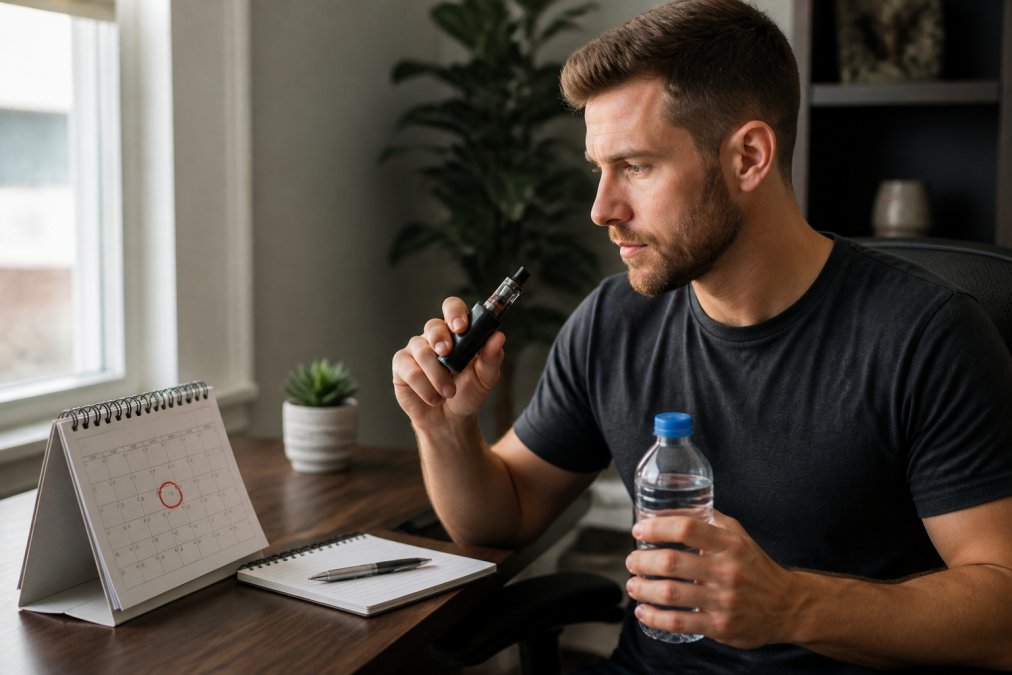
Pick a specific calendar date, not "sometime next month." Write it down. Tell someone. Your brain needs a concrete target.
The quit date marks when you switch completely from cigarettes to vaping. You're not cutting back gradually. You're stopping combustible tobacco entirely and relying on your vaping device instead. This clean break is psychologically powerful because it's definitive.
Triggers are situations, emotions, or routines that make you crave cigarettes. Identify yours and plan replacement behaviors:
Stress trigger: Take three deep breaths with your vaping device, or step outside for a five-minute walk.
Boredom trigger: Vape, chew gum, or use a stress ball.
Social trigger (friends smoking): Vape openly. Your device is your tool.
Post-meal trigger: Vape immediately after eating, or brush your teeth.
Alcohol trigger: Avoid alcohol for the first two weeks if possible.
Having a specific action planned before the trigger hits prevents defaulting to old habits.
Step-Down Nicotine Tapering Schedule
Nicotine tapering is gradual reduction in nicotine strength over weeks or months, addressing physiological dependence systematically. A typical schedule spans 8-12 weeks:
Weeks 1-2: Start at your calculated strength. Vape freely. The goal is replacing cigarettes, not managing nicotine yet.
Weeks 3-4: Drop to the next strength down. You might vape slightly more frequently, but overall nicotine intake drops. Mild withdrawal, slight irritability or difficulty concentrating, is normal.
Weeks 5-6: Drop again. Withdrawal symptoms may intensify. Behavioral support becomes critical.
Weeks 7-8: Use 3mg or 0mg (nicotine-free) as you transition to vaping as a pure habit.
Weeks 9-12: Continue at 3mg or 0mg.
Not everyone needs this exact schedule. Some taper faster; others slower. Many people get stuck at 3mg. That's fine. You've reduced nicotine intake by 80-90% compared to smoking.
Managing Withdrawal Symptoms and Cravings
Nicotine withdrawal is real. Your brain has been flooded with dopamine from cigarettes for years. When you stop, dopamine drops, and your brain screams for it back. Withdrawal symptoms typically peak within the first three days and gradually decline over two to four weeks (the CDC).
Common symptoms include irritability, difficulty concentrating, increased appetite, anxiety, and sleep disturbances. None are dangerous, but they're uncomfortable. Knowing what to expect helps you push through.
Cravings usually last 3-5 minutes. If you can ride out three minutes without smoking, the craving passes. Your vaping device gets you through those three minutes.
Immediate craving management: Vape with long, slow draws. The inhalation and nicotine hit satisfy the craving. If vaping doesn't fully satisfy it, combine it with a secondary action: drink water, chew gum, or do ten pushups.
Withdrawal symptom management:
Irritability: Expect this. Tell people around you that you're quitting. Exercise helps significantly.
Difficulty concentrating: This peaks in the first week. Use your vaping device as a focus tool. Nicotine actually helps with focus during withdrawal.
Increased appetite: Eat more vegetables and protein. Stay hydrated. Don't try to diet while quitting smoking.
Sleep disturbances: Avoid vaping for two hours before bed. Keep your bedroom cool and dark. Sleep improves by week two.
Vaping Cessation Timeline: What to Expect
Understanding the timeline helps you stay committed through the hardest parts. Withdrawal doesn't last forever.
Days 1-3: Peak withdrawal. Cravings are intense and frequent. Irritability is highest. This is the hardest phase. Vape as much as you need.
Days 4-7: Withdrawal begins declining. Cravings are still frequent but slightly less intense. Sleep improves. You start feeling more stable. This is when many people slip back to cigarettes. Don't. You're past the worst.
Week 2: Withdrawal is noticeably better. You can go hours without thinking about cigarettes. Your energy starts returning. You can begin your first nicotine reduction if following a tapering schedule.
Weeks 3-4: Withdrawal is mild. Most people report feeling significantly better. Acute physical dependence is largely resolved. Remaining cravings are usually triggered by specific situations.
Weeks 5-8: You're largely through withdrawal. Occasional cravings appear, usually tied to stress or social situations. These pass quickly. Your confidence grows.
Weeks 9-12: Most people report feeling like themselves again. Withdrawal is gone. Remaining challenges are behavioral, breaking the habit loop and resisting "just one" at parties.
Months 4-6: The psychological habit is fading. You're vaping less frequently. The transition from "recovering smoker" to "person who vapes" is nearly complete.
6+ months: Most people reach a stable point. They're either using vaping long-term as a nicotine replacement or have successfully tapered off nicotine entirely. Either outcome is a win compared to smoking.
Combining Vaping With Behavioral Support
Vaping handles nicotine dependence. Behavioral support handles the habit and psychology. Together, they can improve your chances of success.
A counselor or therapist trained in smoking cessation can help you identify triggers, develop coping strategies, and address underlying stress or anxiety fueling smoking. Cognitive behavioral therapy (CBT) is particularly effective because it teaches you to recognize trigger thoughts and interrupt them before they become cravings.
Support groups, whether in-person or online, connect you with people doing the same thing. Tell family and friends you're quitting. Ask them not to smoke around you during the first month. Have someone you can text when cravings hit. Accountability works.
The behavioral component also includes replacing the habit itself. If smoking was your stress relief, develop alternative stress management: exercise, meditation, journaling, or talking to a friend. If smoking was your social ritual, find new social rituals that don't involve cigarettes.
Health Risks and Safety Considerations
Vaping is not risk-free. It's harm reduction, not harm elimination. E-liquid contains nicotine, propylene glycol, vegetable glycerin, and flavorings. Inhaling these substances long-term carries some risk, though substantially less than smoking combustible tobacco.
The primary risk of vaping is nicotine dependence itself. If you're using vaping as a bridge to stop smoking, that's appropriate. If you're using it as a permanent replacement, you're maintaining nicotine dependence indefinitely.
Propylene glycol and vegetable glycerin are food-grade additives used in many products. Inhaling them long-term may irritate airways in some people. Most users experience no issues.
Flavorings in e-liquid can contain harmful compounds. Most reputable manufacturers have removed problematic substances, but not all. Buy from trusted sources like Bay Roberts Vape and Glass Shop that source from established brands.
Nicotine itself raises heart rate and blood pressure temporarily. People with heart conditions should consult a healthcare provider before vaping.
The most important safety consideration: don't buy vaping devices or e-liquid from unregulated sources. Counterfeit devices can have defective batteries that overheat or explode. Unregulated e-liquid may contain harmful adulterants. Stick with licensed retailers sourcing from established manufacturers like UWELL and Vaporesso that have quality control and safety standards.
If you experience chest pain, severe shortness of breath, or other serious symptoms while vaping, stop immediately and seek medical attention.
Stopping smoking with vapes works because it addresses both nicotine dependence and behavioral habit simultaneously. Bay Roberts Vape and Glass Shop carries the devices and e-liquids you need to make this transition successfully. Our team can help you select the right nicotine strength, choose a device that fits your needs, and guide you through the process. Stop by in person or browse our online catalog to get started. Your path away from cigarettes begins with the right device.
Frequently Asked Questions
Q: Can I effectively stop smoking by switching to a vape?
A: Yes, many people successfully stop smoking with vapes as a harm reduction tool. Vaping delivers nicotine without combustion, eliminating tar and many toxic chemicals found in cigarette smoke. The key is choosing the right nicotine strength and device, then gradually reducing your nicotine concentration over time. Combining vaping with behavioral support and a structured quit plan can increase your chances of long-term success.
Q: How do I choose the right nicotine strength for quitting smoking?
A: Start by matching your current cigarette consumption. Heavy smokers (20+ per day) typically begin with 18-20mg nicotine salts or freebase, while light smokers (under 10 per day) start with 6-12mg. Nicotine salts absorb faster and can provide a stronger throat hit similar to cigarettes. Once you've stabilized on vaping, you can gradually reduce your nicotine concentration every 2-4 weeks. Most people drop by 2-3mg increments until they reach 0mg or quit entirely.
Q: What is the vaping cessation timeline for stopping smoking?
A: Most people transition from cigarettes to vapes within 2-4 weeks, though this varies. Physical nicotine dependence typically decreases within 3-6 months of consistent vaping and nicotine reduction. Psychological habit replacement takes longer, usually 6-12 months. Some people maintain low-nicotine vaping for 1-2 years before quitting completely. Success depends on your personal quit plan, behavioral support, and commitment to gradual nicotine tapering.
Q: How do I handle cravings and withdrawal symptoms?
A: Withdrawal symptoms peak within the first 2-3 days and gradually subside over weeks. Stay hydrated, increase physical activity, and use your vape device when cravings strike, this is the core advantage over cold turkey. You can adjust your nicotine strength upward temporarily if symptoms become severe, then resume your tapering schedule. Behavioral support through counseling or group programs can reduce relapse risk. Common triggers include stress, social situations, and routine activities; identify yours and plan alternatives.
Q: What are the main health risks of using vapes to quit smoking?
A: Vaping carries fewer health risks than smoking combustible tobacco, but it's not risk-free. E-liquid containing nicotine can affect cardiovascular health and may impact lung function with long-term use. Propylene glycol and vegetable glycerin in e-liquid are generally recognized as safe for ingestion but their long-term inhalation effects are still being studied. The goal is to use vaping as a temporary cessation tool, not a permanent replacement, and gradually reduce nicotine until you quit entirely.
Q: Why should I visit a local vape shop instead of ordering online?
A: A knowledgeable local vape shop provides personalized guidance to match your specific needs, something online retailers can't offer. Staff can help you select the right device, nicotine strength, and e-liquid flavor based on your smoking history and preferences. Local shops also ensure you receive authentic products, we're the exclusive licensed retailer for Hoss Glass in the area, and can source hard-to-find items quickly. You get expert support throughout your cessation journey, not just a transaction.
Q: What device should I start with if I'm completely new to vaping?
A: Beginner-friendly devices include the UWELL Caliburn A2 ($38.00), which offers simplicity and excellent flavor, or the Vaporesso XROS 3 Nano ($60.40) for a more compact option. Both are refillable pod systems with straightforward operation. The Caliburn A2 is especially popular for smokers transitioning to vaping because it mimics the mouth-to-lung draw of a cigarette. Start with one of these, pair it with a 50/50 e-liquid blend for balanced flavor and throat hit, and adjust nicotine strength based on your smoking habits.
Q: How does nicotine salts differ from freebase nicotine for cessation?
A: Nicotine salts absorb faster into your bloodstream and provide a stronger throat hit, making them ideal for heavy smokers switching from cigarettes. Freebase nicotine works better in higher-wattage devices and is smoother at lower concentrations, suiting lighter smokers or those further along their quit journey. For smoking cessation, most people start with nicotine salts to satisfy cravings quickly, then transition to freebase as they reduce nicotine strength over time.
This article was written using GrandRanker