
Is Vaping Cheaper Than Smoking? A Cost Breakdown
Table of Contents
- The Short Answer: Is Vaping Cheaper Than Smoking Cigarettes?
- Daily Cost Breakdown: Smoking vs. Vaping
- Initial Investment for Vaping Hardware
- How Many Cigarettes in a Bottle of E-Liquid?
- Disposable Vapes vs. Refillable Devices: The Cost Trap
- Vaping Excise Tax in Canada and Its Impact
- Vape Maintenance Costs for Beginners
- Annual Savings: Real Numbers and What They Mean
- Frequently Asked Questions
Last Updated: October 1, 2026
The Short Answer: Is Vaping Cheaper Than Smoking Cigarettes?
Yes, vaping cheaper than smoking cigarettes for most people, but the savings depend entirely on your device choice and consumption habits. A pack-a-day smoker spends roughly $250-300 per month on combustible tobacco, while someone using a refillable vape device typically spends $30-60 monthly on e-liquid and coil replacements. The upfront hardware investment ranges from $25 to $60, which pays for itself within weeks. However, disposable vapes create a hidden cost trap that can erase these savings entirely.
At Bay Roberts Vape and Glass Shop, we've helped hundreds of people transition from smoking to vaping and understand exactly where the financial advantages lie. The real question isn't whether vaping is cheaper in general, it is, but which device type keeps you in that savings zone long-term.
Daily Cost Breakdown: Smoking vs. Vaping
A pack-a-day smoker faces a straightforward but painful daily expense. Cigarette prices in Canada continue to climb due to excise taxes and retail markups.
Refillable vape devices flip this equation dramatically. A bottle of e-liquid (typically 30mL) costs between $12 and $20 and lasts most users 5-10 days depending on device wattage and puffing frequency. Coil replacements, needed every 1-2 weeks, run $5-8 each.
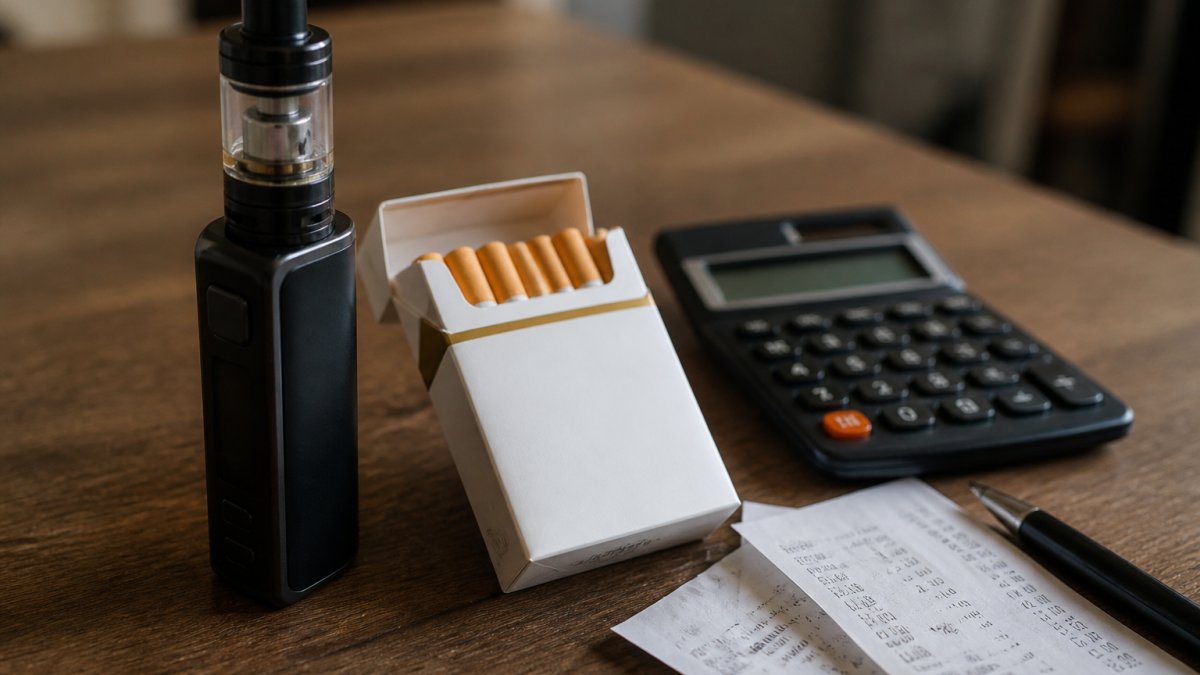
The gap widens even further when you factor in secondary costs. Smokers buy breath mints, gum, laundry treatments, and air fresheners to manage the smell. They pay higher insurance premiums in many cases. Vaping avoids these hidden expenses entirely.
Initial Investment for Vaping Hardware
The entry cost for vaping is one of its strongest financial advantages. A quality refillable pod system costs between $25 and $60 upfront. At Bay Roberts Vape and Glass Shop, we stock several proven starter devices. The Caliburn Alpha Air Kit starts at just $25 and includes everything needed to begin vaping immediately. The Caliburn A2 costs $38 and offers slightly more power and battery capacity. For users wanting premium features, the Caliburn G5 at $60 delivers extended battery life and pod longevity.

Compare this to smoking, where you're immediately locked into recurring daily purchases with no initial investment. A vape device pays for itself in 2-4 weeks through e-liquid savings alone. After that point, you're operating at a fraction of smoking's monthly cost indefinitely.
The initial investment also buys you durability. A refillable device typically lasts 1-2 years with proper maintenance. You're not replacing hardware monthly like you replace cigarette packs. This makes the per-month cost of ownership remarkably low once amortized across the device's lifespan.
How Many Cigarettes in a Bottle of E-Liquid?
Understanding e-liquid volume in cigarette equivalents helps clarify the vaping cost advantage. A standard 30mL bottle of e-liquid typically delivers 3,000-5,000 puffs depending on your device's power output and coil resistance. Most smokers take 10-15 puffs per cigarette, meaning one 30mL bottle roughly equals 200-500 cigarettes.
At current Canadian pricing, 500 cigarettes (roughly 25 packs) would cost $200-250. That same volume of vaping costs $12-20 for the e-liquid itself, plus perhaps $10-15 in coil replacements. The math is stark: you're getting the equivalent nicotine delivery for 5-10% of smoking's cost.
This equivalency matters because it makes the financial comparison tangible. When someone says "vaping is cheaper," they often don't realize just how much cheaper. A single bottle of e-liquid delivers more puffs than most smokers consume in a week, yet costs less than a single pack of cigarettes.
Disposable Vapes vs. Refillable Devices: The Cost Trap
A typical disposable vape costs $8-15 at retail and delivers 200-600 puffs depending on brand and capacity. This translates to a cost-per-puff of $0.02-0.07 per puff.
The trap emerges because disposables feel affordable individually but create unsustainable purchasing patterns.
Why do users fall into the disposable trap? Several behavioral factors converge:
Convenience bias. Disposables require zero maintenance, no learning curve, and no decision-making about wattage or coil replacement. This frictionless experience feels like a bargain compared to the minor effort of refilling a pod or replacing a coil. Users perceive the simplicity as worth the cost premium.
Frequency blindness. Buying one disposable feels cheap. Buying three per week feels normal. But purchasing behavior changes when frequency increases.
Flavor variety appeal. Disposables are marketed with dozens of flavor options, and users are tempted to try new flavors frequently. Each new flavor means a new purchase.
Lack of sunk-cost psychology. A $25 refillable device creates psychological ownership. Users maintain it properly, replace coils on schedule, and optimize usage to protect their investment.
The true cost comparison. Over one year, a disposable-only user spends $1,440-2,160 on vaping alone. A refillable user spends $480-720 after the initial hardware investment.
For anyone serious about cost savings, the choice is clear: invest the small amount of time and money upfront to learn refillable devices. The Caliburn Alpha Air Kit ($25) or Caliburn A2 ($38) eliminate the disposable trap entirely. Pair either with e-liquid at $12-20 per 30mL bottle and replacement coils at $5-8 per pack, and you're locked into genuine savings that compound over years. Disposables are not a cheaper alternative to smoking; they're a more expensive alternative to refillables that happens to be cheaper than cigarettes. For budget-conscious consumers, that distinction is the difference between saving $800 annually and saving $2,400 annually.

Vaping Excise Tax in Canada and Its Impact
Federal excise tax on vaping products in Canada affects the final cost consumers pay, though the impact is structurally different from tobacco taxation in ways that matter for long-term savings.
Tobacco excise tax operates on a completely different scale. Federal excise duty on cigarettes is $0.4225 per cigarette, and most provinces layer additional excise taxes on top.
The structural advantage for vapers becomes clear when you factor in price volatility. Tobacco excise taxes increase annually, typically 2-4% per year, which means smoking costs rise predictably and substantially.
Regional variation also matters. Some provinces apply additional provincial excise duties on vaping products (Ontario and Quebec, for example, have explored or implemented supplementary taxes), but these remain far below tobacco rates.
For someone calculating long-term savings, this tax structure is crucial. A smoker who saves $2,400 annually by switching to vaping today will likely save $2,600-2,800 annually five years from now, as tobacco taxes climb.
Vape Maintenance Costs for Beginners
Maintenance costs for refillable devices are minimal compared to the ongoing expenses of smoking. Most users need to replace coils every 1-2 weeks, depending on usage and e-liquid sweetness. A pack of replacement coils typically costs $5-8 and includes 2-4 coils, meaning each coil costs roughly $1.50-3.
Beyond coils, maintenance is straightforward. Refillable pods need occasional cleaning with a dry cloth to prevent residue buildup, but this requires no supplies. Some users buy replacement pods if they want to switch flavors without cleaning, adding perhaps $3-5 monthly to costs. Battery charging is free after the initial USB cable purchase.
Compare this to smoking, where maintenance is invisible but pervasive. Cigarette smoke damages surfaces, requiring more frequent cleaning supplies. Smokers often replace lighter fluid, lighters, and ashtrays. Dental cleaning costs tend to be higher for smokers. Car interiors require more aggressive odor treatment. These aren't direct smoking costs, but they're maintenance expenses that vaping eliminates.
For beginners at Bay Roberts Vape and Glass Shop, we recommend starting with a device like the Caliburn A2 at $38, which includes two replacement pods in the box. Your first month costs roughly $50-70 total (device plus e-liquid and one coil replacement). After that, monthly costs stabilize at $30-40 indefinitely. That's the real maintenance picture: minimal supplies, zero hidden costs, predictable monthly expense.

Annual Savings: Real Numbers and What They Mean
The financial case for vaping becomes compelling when you calculate annual totals. A pack-a-day smoker spends $2,880-3,600 per year on cigarettes alone. Add secondary costs, mints, air fresheners, higher laundry expenses, potential insurance premiums, and the annual smoking cost easily exceeds $4,000.
A refillable vape user spends roughly $360-720 annually on e-liquid and coils after the initial $25-60 hardware investment. Even accounting for occasional replacement pods or experimenting with different flavors, annual vaping costs rarely exceed $800.
This creates annual savings of $2,100-3,200 for someone switching from a pack-a-day habit to refillable vaping. Over five years, that's $10,500-16,000 in savings. Over a decade, it's $21,000-32,000.
The savings are real, but they require discipline. Using disposable vapes or high-wattage devices that burn through e-liquid quickly erodes the advantage. Sticking with refillable devices and moderate consumption habits is what creates the dramatic cost difference.
The choice between smoking and vaping isn't just about health, it's fundamentally a financial decision. If you're ready to make the switch and capture these savings, Bay Roberts Vape and Glass Shop offers quality refillable devices from trusted brands like UWELL, GeekVape, and Vaporesso. Our team can guide you toward the right starter device for your needs and budget. Visit us in person or browse our selection online to find the device that works for you. The Caliburn G5, Caliburn A2, and GeekVape Wenax Q are all proven choices that deliver years of savings compared to smoking.
Frequently Asked Questions
Is vaping cheaper than smoking in Canada?
Yes. A pack-a-day smoker spends roughly $8-12 per day depending on brand and province, totaling $2,920-4,380 annually. A vaper using refillable devices typically spends $2-4 daily on e-liquid and coil replacement, or $730-1,460 per year. After the initial device purchase ($25-60), vaping costs 60-75% less than smoking over a year.
How many puffs of a vape equal one cigarette?
A typical cigarette contains about 10-15 puffs, while a refillable vape pod (2 mL capacity) delivers roughly 200-400 puffs depending on your device and vaping style. This means one pod roughly equals 13-40 cigarettes. The exact number varies based on nicotine strength, inhalation depth, and device power output.
What are the ongoing costs of maintaining a vape device?
Monthly vape maintenance costs for beginners typically include e-liquid ($15-30), replacement coils or pods ($10-20), and occasional battery replacements if needed. Devices like the Caliburn G5 use pods rated for 17+ refills, reducing replacement frequency. Budget $25-50 monthly for supplies, or roughly $300-600 annually once your initial device investment is recouped.
Does the initial investment in a vape device pay off compared to smoking?
Yes, quickly. A quality refillable device like the Caliburn G5 ($60) or Caliburn A2 ($38) pays for itself within 2-3 weeks of switching from cigarettes. Since smokers spend $8-12 daily, the device cost is recovered in 5-15 days. After that, ongoing vaping costs remain 60-75% lower than smoking, making the upfront investment worthwhile within your first month.