
Vape Battery Safety Guidelines: A Complete Guide
Table of Contents
- Why Vape Battery Safety Guidelines Matter
- Disposable, Integrated, and Removable Batteries Explained
- How to Charge a Vape Battery Safely
- Vape Battery Storage and Transport at Home and on the Road
- Vape Battery Warning Signs You Should Never Ignore
- Vape Battery Safety for Beginners: A Simple Starting Checklist
- Emergency Response: Overheating, Venting, and Fire
- Recycling and Disposing of Vape Batteries Responsibly
- Frequently Asked Questions
Last Updated: October 17, 2026
Why Vape Battery Safety Guidelines Matter
Vape battery safety is the set of handling, charging, storage, and inspection practices that keep a lithium-ion cell inside its safe operating range. At Bay Roberts Vape and Glass Shop, we walk new and experienced vapers through these habits daily.
The stakes are straightforward. A lithium-ion cell stores a lot of energy in a small metal can.
Below, we break down how to charge a vape battery safely, how to store and transport cells, the warning signs to act on, and what to do in an emergency. We have helped customers pick compatible devices and batteries for years.
Disposable, Integrated, and Removable Batteries Explained
Vape devices use one of three battery arrangements, and each carries a different risk profile. Knowing which one you own tells you what you can and cannot control.
- Disposable vapes ship with a sealed, non-rechargeable cell. You cannot inspect or replace it, so safety depends on buying from a reputable source and disposing of the device once the charge runs out. Never attempt to open or recharge a disposable.
- Integrated batteries are built into a rechargeable device and charged through a USB-C port. You control the charging habits and the power source, but not the cell itself.
- Removable batteries are separate cells, commonly 18650 or 20700 sizes, that you charge in an external bay charger and swap between devices. These give you the most control and demand the most knowledge: wraps, amp limits, and matching cells to your device all matter.
Removable cells are where safety knowledge pays off most. If you run a device with an external battery, treat the cell as a piece of equipment, not an accessory.

How to Charge a Vape Battery Safely
Safe charging comes down to three things: the right power source, a charger that matches your device's specifications, and habits that keep heat under control. Get all three right and you remove the most common cause of battery stress.
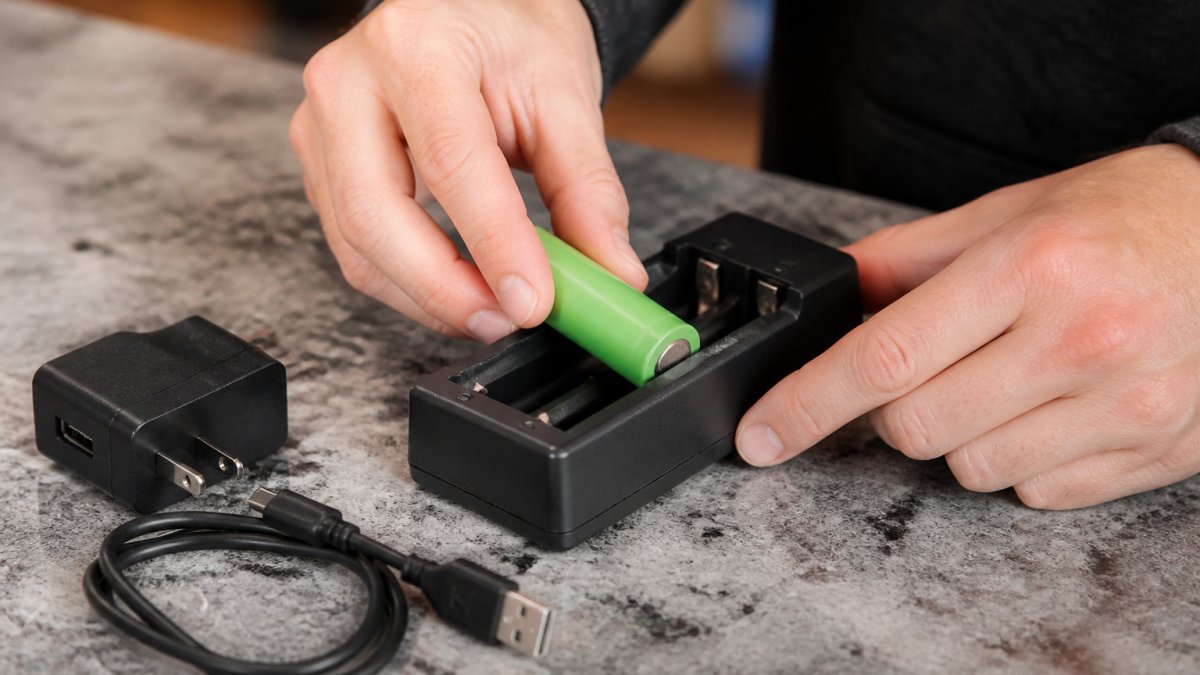
Pick the Right Charger and Power Source
Use the charger and cable that came with your device, or a reputable equivalent rated for it. A Type-C charger matched to your device is a safer bet than a mystery cable from a drawer.
A 30W charging block with Type-C and USB ports delivers consistent power and is a sensible option for devices that charge over USB-C. For removable cells, our 18650 3.7V 3000mAh battery and Efest 20700 battery are the kind of cells we stock for customers who want a known quantity.
USB-C, Fast Charging, and Power-Source Compatibility
Modern vape devices increasingly charge over USB-C, and many support fast-charging protocols. That convenience comes with a compatibility question: not every USB-C cable or power adapter delivers power the same way.
The practical rule is to follow the device manufacturer's instructions first. If the manufacturer specifies a particular charger rating or cable type, use that. If it does not, choose a reputable USB-C power adapter from a known brand and avoid uncertified bargain blocks.
A common pattern is that charging problems trace back to a mismatched or low-quality power source rather than the device itself.
Charging Habits That Prevent Overheating
- Charge on a hard, non-flammable surface such as a countertop or metal tray, never on a bed, sofa, or carpet.
- Never leave charging unattended, and never charge overnight while you sleep.
- Let a warm cell cool before charging it.
- Unplug the charger once the device or cell is full.
- Do not mix different batteries in the same charger bay at the same time.
- Keep the charging area clear of flammable materials and away from direct sunlight.
Vape Battery Storage and Transport at Home and on the Road
Store cells at room temperature, away from direct sunlight and extreme heat or cold. Keep removable batteries in a protective case, never loose in a pocket or bag where keys and coins can bridge the terminals and cause a short circuit.
At home, a cool, dry drawer away from flammable surfaces works well. On the road, a hard plastic battery case is non-negotiable. If you travel by air, keep spare cells in your carry-on in a case, never in checked baggage, and check the current carrier rules before you fly.
Vape Battery Warning Signs You Should Never Ignore
Inspect your cells regularly, and act on any of these signs immediately:
18650 | 3.7V | 3000mAh Purple Battery →
- Damaged wrap: nicks, tears, or peeling on the outer wrap expose the metal casing and invite a short. Stop using the cell.
- Dents or deformation: any physical damage means retirement.
- Heat: a cell that gets hot during use or charging, or feels warm when idle, is a red flag.
- Swelling: a puffy or bulging cell is failing. Isolate it and dispose of it properly.
- Odd smell or discoloration: acrid odors or scorch marks mean stop now.
- Sudden poor performance: a cell that drains fast or will not hold a charge is nearing the end of its life.
A common mistake is taping over a torn wrap and carrying on. Replace the wrap or retire the cell. It is not worth the risk.
Vape Battery Safety for Beginners: A Simple Starting Checklist
New to vaping? Start here and build the habits early. Here is the checklist we walk first-time buyers through:
- Buy devices and cells from a reputable shop, not an unknown online seller.
- Match the battery to the device and follow the manufacturer's instructions.
- Use the supplied charger or a quality equivalent.
- Charge on a hard surface and never unattended.
- Store spare cells in a protective case.
- Inspect wraps and casings before every use.
- Keep devices out of extreme heat and direct sunlight.
- Recycle cells at end of life rather than binning them.
Emergency Response: Overheating, Venting, and Fire
If a battery starts to overheat, vent, or catch fire, act fast and stay calm. Venting cells release hot gas and can eject material, so keep your distance and do not handle the cell with bare hands.
- Move away and clear the area. Get people back and do not try to pick up a venting cell. Keep children and pets away.
- If safe to do so, isolate it. Use tongs or a non-conductive tool to move the device onto a non-flammable surface, or smother it with a fire blanket or a bucket of sand if you have one. Never use your hands.
- Do not use water on a lithium-ion fire in an enclosed space; it can worsen the reaction. If the fire is spreading or you cannot contain it safely, evacuate and call emergency services.
- Ventilate the space once the danger has passed, as venting releases irritating gas. Open windows and leave the area until the air clears.
- Do not reuse the device or cell. A cell that has vented is finished, even if it looks intact.
A common pattern in home incidents is that people try to move a smoking device too quickly or smother it with the wrong material. If you are unsure, evacuate and call for help rather than improvising.
The best emergency plan is prevention: the charging and storage habits above remove most of the scenarios that lead here.
Recycling and Disposing of Vape Batteries Responsibly
Never put vape batteries, disposable devices, or cells in household garbage or recycling bins. Lithium-ion cells can short and ignite inside collection trucks and sorting facilities.
Take used cells and spent devices to a local battery or e-waste drop-off point that accepts lithium-ion batteries. Many municipalities run household hazardous waste programs, and retailers that sell batteries often accept them back. Before disposal, tape the terminals of a removable cell with electrical tape to prevent shorts, and keep damaged or swollen cells isolated in a non-flammable container until you can hand them in.
Frequently Asked Questions
How can I tell if my vape battery is safe to use?
Inspect the wrap and insulator every time you swap a removable cell. The wrap should be smooth and cover the whole casing with no nicks, tears, or exposed metal, and the positive end insulator ring must sit flat. A cell that is swollen, dented, discolored, or smells sweet or chemical is finished, regardless of age. For integrated and disposable devices, watch for heat while charging, a swollen body, or a charge that no longer holds. Any of these signs means stop using it and replace it.
How should I charge a vape battery safely?
Use the charger that came with the device, or a reputable bay charger set to the correct voltage, and plug it into a wall outlet rather than a laptop or car port. Charge on a hard, non-flammable surface away from bedding, paper, and curtains, and never leave a charging battery unattended or overnight. Pull removable cells once they reach full charge, and let a warm battery cool before putting it on the charger. A 30W dual-port charging block paired with a quality Type-C cable covers most USB-C devices without stressing the port.
Can I use any battery in my vape device?
No. Removable cells must match the device's specified size, continuous discharge rating, and chemistry, and they should be bought from a shop that stocks authentic, tested cells rather than unknown online sellers. A 3000mAh 18650 rated for the amp draw your mod needs is a different product from a low-drain cell of the same size. If your device has an integrated battery, never substitute an external one. When in doubt, bring the device in and match the cell to the manufacturer's instructions.
How should vape batteries be stored and transported?
Keep removable cells in a plastic battery case, never loose in a pocket, bag, or glovebox where keys and coins can bridge the terminals. Store them at room temperature, away from direct sunlight, radiators, and freezing cars, and keep the charge level around half if you will not use them for weeks. A full discharge left sitting shortens lifespan. For travel, carry cells in your cabin baggage in a case, and check the airline's lithium battery rules before flying.
What should I do if a vape battery gets hot, swollen, or damaged?
Stop using it immediately and move it away from anything flammable. A swollen or venting cell should go outside onto concrete or bare ground, away from people and buildings, and you should not try to charge it or force it into a device. If it is smoking or flaming, do not use water on a lithium-ion fire; smother small fires with a fire blanket or dry powder extinguisher if it is safe to do so, and call emergency services for anything larger. Then take the cell to a battery recycling drop-off.
How can I make my vape battery last longer?
Avoid running a removable cell to zero, charge it before it drops below roughly a quarter, and pull it off the charger at full rather than leaving it plugged in for hours. Store spare cells at around half charge, keep them cool, and rotate a matched pair together instead of mixing old and new. For integrated devices, use the supplied cable and a stable power source, and skip fast charging in hot conditions. These habits slow the capacity loss that every lithium-ion battery experiences over its charge cycles.
Battery safety is not complicated, but it does reward attention: the right charger, a hard surface, a protective case, and a habit of inspecting your cells go a long way. If you are setting up a new device or replacing a worn battery, our team at Bay Roberts Vape and Glass Shop can help you choose compatible cells and chargers, walk you through safe charging, and point you to proper disposal. Stop by the shop or browse our online catalog, and get set up with gear you can trust.