
How to Clean Glass Pipes with Salt and Alcohol Safely
Last Updated: October 31, 2026
Quick Summary
Salt and alcohol are safe for plain, unpainted borosilicate glass pipes, but not for every piece. Skip the method on painted or decal glass, frit or enamel coatings, silicone gaskets, wood or bamboo, acrylic and plastic, glued joints, and mixed-material pieces, and use hot water and dish soap instead.
- Isopropyl alcohol dissolves resin while coarse salt scours loosened residue off the glass walls.
- Use 70% alcohol for light buildup and 90% or 91% for heavy resin.
- Soak for 30 minutes to a few hours normally, and up to 24 hours for heavy resin.
- Remove silicone gaskets and O-rings before soaking because alcohol dries and cracks them.
- Rinse with warm water until the alcohol smell is gone, then dry fully before use.
Table of Contents
- Why Salt and Alcohol Work on Glass Pipes, and Where They Don't
- Is Isopropyl Alcohol Safe for Glass Pipes? Concentration and Compatibility
- The Best Salt for Cleaning a Glass Pipe (and How Much Abrasion You Want)
- How Long to Soak a Glass Pipe in Alcohol
- Step-by-Step: Cleaning a Glass Pipe with Salt and Alcohol
- How to Clean a Glass Pipe Without Alcohol
- Rinsing, Drying and Checking the Piece Is Actually Clean
- Pick Up Cleaning Supplies at Bay Roberts Vape and Glass Shop
- Frequently Asked Questions
Why Salt and Alcohol Work on Glass Pipes, and Where They Don't
Salt and alcohol are safe for plain, unpainted borosilicate glass pipes, but not for every piece in your collection. The method works because alcohol dissolves resin while salt scours it loose.
That distinction matters more than most cleaning guides admit. The method is a solvent plus an abrasive, and both parts can damage the wrong surface. The safety question is not just "is it glass?" but "is it glass with nothing attached, bonded, or applied to it?"
What Alcohol Dissolves and What Salt Loosens
Isopropyl alcohol is a solvent that breaks down the sticky resin left behind after a session. It softens the tar-like buildup so it can be wiped or rinsed away.
Salt does a different job. Coarse salt acts as a gentle abrasive that scrapes loosened residue off the glass walls without dissolving anything itself. The two work as a pair: alcohol softens, salt scours.
Borosilicate vs. Decorated, Coated, and Mixed-Material Pieces
The compatibility question is where most guides stop too early. Plain borosilicate glass, the clear, lab-grade glass used in most quality pipes and bongs, handles isopropyl alcohol and coarse salt without issue. The problems start with anything added to or combined with that glass:
- Painted, printed, or decal glass, alcohol can lift the finish, and abrasion can dull or remove it. Skip the soak and wipe the exterior only with a damp cloth.
- Frit, enamel, or colored coatings, some decorative finishes are applied and fired, but not all are solvent-resistant. Test a hidden spot first, or clean with hot water and dish soap only.
- Silicone gaskets and O-rings, alcohol dries and cracks them over repeated exposure. Remove them before soaking, or clean the piece without solvent.
If your downstem is removable, pull it out and clean it separately. A spare Basic 14mm Glass Downstem makes that swap easier. Worried about a hairline crack? Read our guide on repairing small cracks in glass bongs before you soak anything.
Handling and Exposure Precautions
Isopropyl alcohol is flammable, and the salt-and-alcohol method involves shaking it in a sealed bag. A few practical precautions matter:
- Ventilate the area. Work near an open window or in a well-ventilated room; alcohol vapor builds up in small spaces.
- Keep it away from flames and heat. No lighters, candles, stoves, or hot surfaces nearby while you pour, shake, or rinse.
- Protect skin and eyes. Wear nitrile gloves if you have sensitive skin, and avoid splashing during the shake. If alcohol gets in your eyes, rinse with water.
A quick check before you pour:
- Is the glass unpainted, undecorated, and clear?
- Are there no silicone rings, gaskets, or glued joints attached?
- Is the piece free of cracks and chips?
All clear? Go ahead. If any box is unchecked, use the alcohol-free route instead.
Salt and alcohol suit plain borosilicate glass but not every material that turns up on a pipe, so check the piece against this list first.
| Material or feature | Safe with salt and alcohol? | What to do instead |
|---|---|---|
| Plain borosilicate glass | Yes | Soak and shake as normal |
| Painted, printed, or decal glass | No | Wipe exterior only with a damp cloth |
| Frit, enamel, or colored coatings | Not always | Test a hidden spot, or use hot water and dish soap |
| Silicone gaskets and O-rings | No | Remove before soaking, or clean without solvent |
| Wood or bamboo sections | No | Keep dry, wipe with a barely damp cloth |
| Acrylic and plastic | No | Use warm water and dish soap |
| Glued or bonded joints | No | Do not soak structural joints |
| Mixed-material pieces | No | Disassemble and treat each part by its material |
Is Isopropyl Alcohol Safe for Glass Pipes? Concentration and Compatibility
Isopropyl alcohol is safe for plain glass at 70% to 99% concentration, but higher percentages clean faster and carry more risk. 70% alcohol is the gentler choice and works well for light buildup. 90% alcohol and 91% alcohol cut through heavy resin in less time.
Why the difference? The water in lower concentrations slows evaporation and gives the solvent more contact time. Higher concentrations evaporate quickly, so you get a stronger but shorter working window.
Compatibility is the bigger question. Plain glass handles all of these. Anything with a coating, a gasket, or a bonded joint does not.
A quick check before you pour:
- Is the glass unpainted and clear?
- Are there no silicone rings attached?
- Is the piece free of cracks?
Four checks, all clear? Go ahead.
The Best Salt for Cleaning a Glass Pipe (and How Much Abrasion You Want)
Coarse salt is the best choice for cleaning a glass pipe because it scours without scratching.
How much you use controls the abrasion. A light sprinkle is enough for a quick refresh.
One caution worth repeating: a Reddit discussion on abrasive cleaning notes that sand can scratch glass over time.
We suggest starting light. Add more only if the first shake does not clear the residue.
How Long to Soak a Glass Pipe in Alcohol
Soak a glass pipe in alcohol for 30 minutes to a few hours for normal buildup, and up to 24 hours for heavy resin. Longer is not automatically better.
Soak time depends on three things:
- Buildup thickness - light film needs 30 minutes
- Alcohol strength - 90% works faster than 70%
- Piece complexity - narrow airways need more time
Set a timer and check at the 30-minute mark. If the resin still feels tacky, give it another round rather than leaving it overnight by default. A 24-hour soak is for stubborn cases, not routine cleaning.
Step-by-Step: Cleaning a Glass Pipe with Salt and Alcohol
Here is the full method, start to finish. Total time is about 45 minutes, most of it soaking.
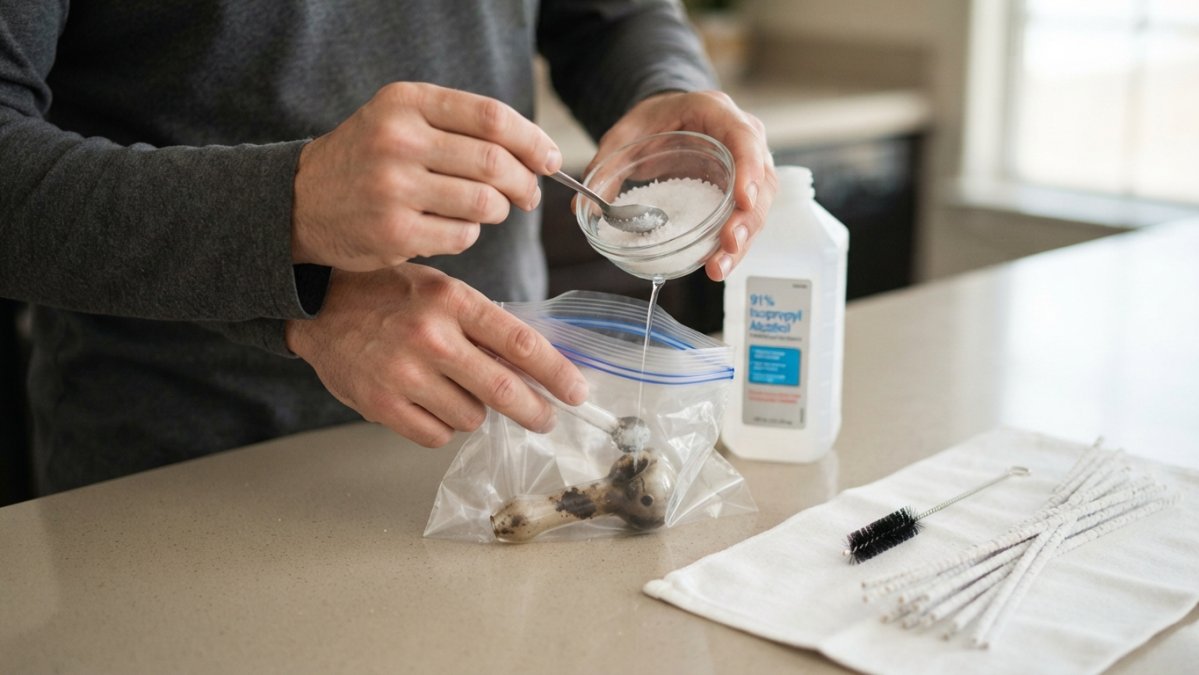
Supplies to Gather First
- Isopropyl alcohol at 70% or higher
- Coarse salt
- Resealable bag large enough for the piece
Add a pack of Big Ben Pipe Cleaners to your kit. They reach the spots salt cannot.
Cleaning Bowls, Downstems and Narrow Airways
- Empty and rinse the piece with warm water to remove loose ash.
- Add salt and alcohol to the resealable bag, then seal the piece inside.
- Shake gently for one to two minutes. Do not slam it against a hard surface.
- Soak for 30 minutes, or longer for heavy resin.
- Scrub the bowl and airway with a pipe cleaner or brush.
- Rinse thoroughly with warm water until the alcohol smell is gone.
- Dry completely before use.
For bowls and hard-to-reach spots, a Magnetic Bong Scrubber lets you agitate residue without shaking the whole piece.

How to Clean a Glass Pipe Without Alcohol
Clean a glass pipe without alcohol using hot water, dish soap, and a brush, or reach for baking soda as a mild abrasive.
Baking soda mixed with a little warm water makes a paste that lifts light residue. Soak the piece in hot water first to soften the resin, then scrub.
Other alcohol-free options:
- Hot water soak followed by a stiff brush
- Dish soap and warm water for light film
- Baking soda paste for spot scrubbing
These take more elbow grease. They also protect painted, silicone, and wood pieces that alcohol would ruin.
Rinsing, Drying and Checking the Piece Is Actually Clean
Rinsing and drying are not the same as verifying. A pipe can look clean and still carry alcohol residue, loosened resin film, or salt grit in narrow airways. The goal is to remove the cleaner, not just the visible buildup.
The Rinse-and-Inspect Checklist
Work through these steps in order before you pack the piece again:
- Rinse with warm water, not hot. Hot water can stress glass with temperature shock, especially if the piece is cold from soaking. Warm is enough to carry residue away.
- Rinse until the alcohol smell is gone. Smell is a practical indicator; if you can still detect alcohol, keep rinsing.
- Flush every airway. Run warm water through the bowl, downstem, and any narrow channel. Salt grit can lodge in small openings and is easy to miss.
- Check for grit with a clean pipe cleaner. Pass a fresh cleaner through narrow airways; if it comes out with grit or film, flush again.
- Inspect against light. Hold the piece up to a light source and look for cloudy patches, sticky film, or water spots that suggest residue.
- Feel the inside of the bowl. It should feel smooth, not tacky. A tacky feel means resin remains and the piece needs another soak.
- Dry fully before use. Shake out excess water, then air-dry on a clean towel or rack. Trapped moisture in a downstem or chamber can dilute your material and encourage buildup.
Material-Specific Finishing for Non-Glass Parts
If your piece has parts that are not plain glass, finish them separately:
- Silicone gaskets and O-rings, rinse with warm water only, dry fully, and reinstall once the glass is dry. Do not soak them in alcohol.
- Wood or bamboo, wipe with a barely damp cloth, then dry immediately; do not submerge.
- Metal accessories, warm water and dish soap are usually enough; dry promptly to avoid water spots.
For the full water pipe routine, our step-by-step glass water pipe guide covers the wider cleaning process.
Pick Up Cleaning Supplies at Bay Roberts Vape and Glass Shop
Keeping a clean pipe comes down to having the right supplies on hand before you need them.
We stock the small stuff that makes cleaning easy. Our Randy's Brushes come in 5mm and 8mm sizes for bowls and airways. Randy's Swipes give you 20 individually wrapped wands for quick touch-ups between deep cleans.


As the licensed Hoss Glass retailer in the area, we can help you match supplies to your piece. Stop in and we will point you to the right brush, cleaner, or replacement part.
Frequently Asked Questions
Can you clean a glass pipe with rubbing alcohol?
Yes, on plain glass. Rubbing alcohol is isopropyl alcohol, and it dissolves the resin that builds up inside glass pipes. Use a 90% or 91% concentration rather than 70%, since the higher alcohol level cuts resin faster and leaves less water behind. Add coarse salt as a gentle abrasive, shake, then rinse with warm water until no film or smell remains. Skip this method on painted, frosted or decorated glass, and on pieces with silicone, wood or acrylic parts.
Can salt scratch or damage a glass pipe?
Coarse salt can dull or scratch glass over time if you shake hard or use it dry. Salt used aggressively can wear on glass over time. Use enough alcohol to keep the salt moving in liquid, shake gently rather than violently, and keep the salt away from printed logos and frosted sections. For daily cleaning, a soft brush or pipe cleaner does less wear than repeated salt shakes.
How long should you soak a glass pipe in alcohol?
Most pieces loosen up in 30 to 60 minutes of soaking. Heavily resined pipes, or ones that sat uncleaned for weeks, may need a few hours. A full 24-hour soak is usually unnecessary and gives the alcohol more time to work on any finish or attached part. Check the piece every 30 minutes, shake gently, and stop soaking as soon as the resin lifts. Rinse thoroughly afterward so no alcohol or salt residue stays behind.
What type of salt is best for cleaning a glass bong?
Coarse salt works best because the larger crystals scrub without packing into narrow airways. Table salt dissolves too quickly in alcohol and adds little abrasion, while fine salt can clump inside a bowl or downstem. Epsom salt is a common substitute, though it dissolves faster than coarse kosher or pickling salt. Use two to three tablespoons for a pipe and a quarter cup or more for a bong, always with enough alcohol to keep the crystals suspended.
Your glass deserves a cleaning routine that protects it, not one that wears it down. At Bay Roberts Vape and Glass Shop, we carry the brushes, pipe cleaners, and scrubbers that make the job quicker, plus genuine Hoss Glass pieces and honest advice on what each one can handle. Get directions to the shop and pick up everything you need in one visit.
