
Essential Glass Cleaning Tools for Beginners: What to Buy First
Last Updated: November 8, 2026
Quick Summary
A squeegee, a scrubber or T-bar, a microfiber cloth, a spray bottle, and a small bucket will handle nearly every job on a glass surface. That's the whole minimum kit of glass cleaning tools for beginners, and everything else is an upgrade you earn by getting good with these five.
- A squeegee sized appropriately for your glass, plus a smaller detail squeegee, covers most glass in a home.
- Wash glass with a scrubber or T-bar before squeegeeing, working top to bottom.
- Keep two microfiber cloths, one damp for wiping and one dry for finishing.
- Use two buckets if you can, one for solution and one for rinsing your scrubber.
- Avoid ammonia-based cleaners on tinted or filmed glass and abrasive powders on any glass.
Table of Contents
- The Minimum Kit: Essential Glass Cleaning Tools for Beginners
- Choosing the Best Squeegee for Windows and Glass Surfaces
- Scrubbers, T-Bars, and Sleeves: The Washing Stage
- Microfiber Cloth for Glass Cleaning: Detailing and Drying
- Cleaning Solution, Buckets, and Solution Prep
- How to Clean Glass Without Streaks, Scratches, or Water Spots
- Reaching Higher: Extension Poles and Hard-to-Reach Windows
- Caring for Glass Accessories and Picking Your Starter Supplies
- Frequently Asked Questions
The Minimum Kit: Essential Glass Cleaning Tools for Beginners
You don't need a van full of gear to keep glass clean. You need five things, and you need to understand what each one actually does. This guide covers the essential glass cleaning tools for beginners, and it starts with a simple truth: most people buy too much and learn too little.
A squeegee, a scrubber, a microfiber cloth, a spray bottle, and a small bucket will handle nearly every job on a glass surface. That's the whole minimum kit. Everything else is an upgrade you earn by getting good with these five.
Here's what most guides get wrong. They hand a beginner a full professional setup and skip the part where technique matters more than the tool. A cheap squeegee used well beats an expensive one used badly.
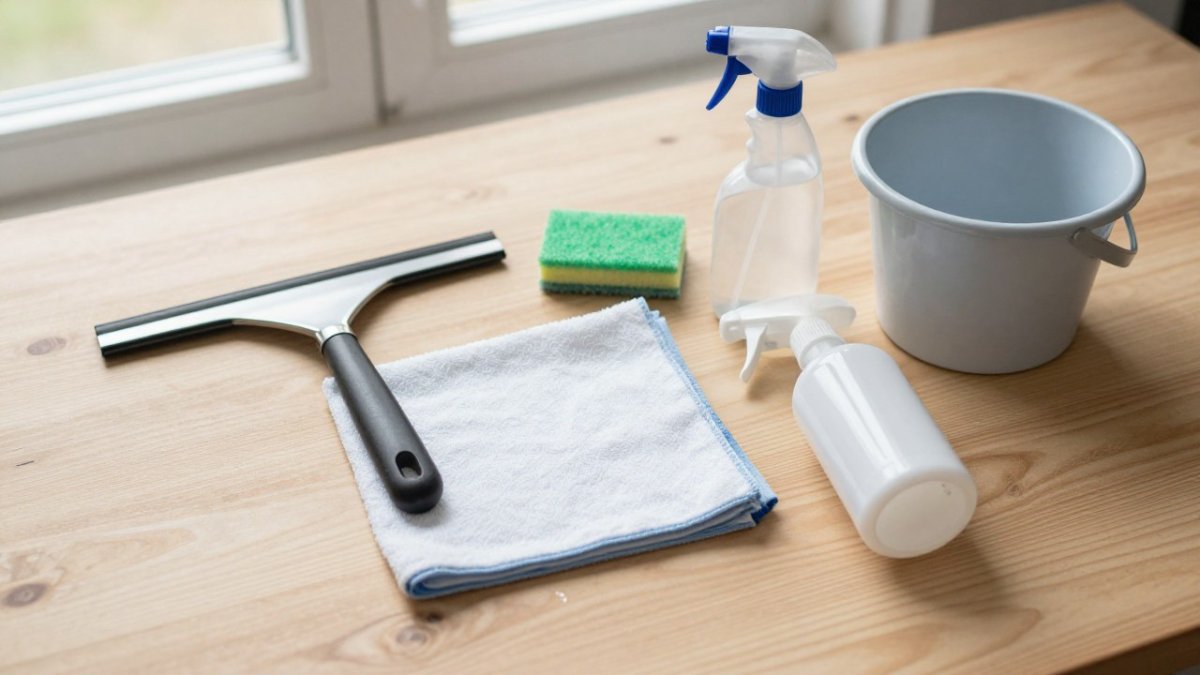
What Belongs in a Starter Kit
- Squeegee with a channel and rubber blade, sized to your glass
- Scrubber or T-bar for loosening dirt before you squeegee
- Microfiber cloth for detailing edges and drying
- Spray bottle for solution
- Small bucket for water and a second cloth
What You Can Skip for Now
Extension poles, water-fed poles, purified water systems, and a bucket on a belt are all professional tools. They solve problems you don't have yet. Buy them when reach or volume becomes your bottleneck, not before.
Here are the five tools that make up the whole minimum kit, and what each one is for.
| Tool | Purpose |
|---|---|
| Squeegee | Channel and rubber blade, sized to your glass |
| Scrubber or T-bar | Loosens dirt before you squeegee |
| Microfiber cloth | Detailing edges and drying |
| Spray bottle | Holds solution |
| Small bucket | Holds water and a second cloth |
Choosing the Best Squeegee for Windows and Glass Surfaces
The best squeegee for windows is one that matches your glass width and has a sharp, straight rubber edge. Size matters more than brand, but channel material, rubber hardness, and handle shape all affect how cleanly the blade clears water. A squeegee too wide for the pane leaves water at the edges; too narrow and you're making extra passes.
Match the Channel to the Pane
Measure the glass before you buy. A 30 cm channel suits most interior windows and smaller panes, while a 40-45 cm channel covers large exterior windows in fewer strokes. For narrow panes, sidelights, and divided-light windows, a 15-25 cm channel gives you control at the edges. Many beginners find a 30 cm squeegee plus a smaller 15 cm detail squeegee covers most of the glass in a home.
Channel shape matters too. A straight channel is the standard for flat glass. A swivel or pivoting channel helps on angled panes and hard-to-reach corners, but it adds a learning curve. Start straight, then add a swivel once your stroke is consistent.
Rubber, Handle, and Replacement Parts
Check the squeegee rubber for nicks before each use; a torn edge leaves streaks no technique can fix. Softer rubber conforms to slightly uneven glass and is forgiving for beginners; harder rubber lasts longer but shows every flaw in your stroke. Replacement rubber is cheap and worth keeping on hand. Swap it the moment you feel it drag or skip.
Handle ergonomics matter more than most beginners expect. A handle that fits your grip reduces wrist fatigue on large windows, and a quick-release mechanism lets you change channels or move the squeegee to an extension pole without tools. Look for a handle with a secure lock if you plan to add a pole later.
What Beginners Can Safely Skip
Professional squeegees with wide channels, swivel heads, and pole-ready handles are upgrades, not requirements. A basic straight-channel squeegee in the right size, with a spare rubber blade, will out-clean an expensive setup used badly. Buy the upgrade when reach or volume becomes your bottleneck, not before.
Watch out: a squeegee stored with pressure on the rubber develops a flat spot that streaks every pane until you replace the blade.
Scrubbers, T-Bars, and Sleeves: The Washing Stage
Washing comes before squeegeeing, and this is the stage beginners rush. A scrubber or T-bar with a sleeve lifts dirt and residue off the glass surface so the squeegee can clear it cleanly.
Work top to bottom and overlap your passes. For interior glass, a damp sleeve with a light solution is enough. For exterior windows with grit and grime, scrub with more pressure and rinse the sleeve often.
Randy's Brushes are individual cleaning brushes for bongs and pipes, available in 5mm and 8mm sizes, useful for scrubbing small glass pieces and tight spots where a cloth won't reach.

Microfiber Cloth for Glass Cleaning: Detailing and Drying
A microfiber cloth for glass cleaning does the job no squeegee can: detailing edges, drying the sill, and catching the last streaks. Keep two cloths, one damp for wiping and one dry for finishing.
Fold the cloth into quarters and rotate to a clean face as it loads up. A dirty microfiber cloth just spreads residue around and creates the water spots you're trying to avoid.
Cleaning Solution, Buckets, and Solution Prep
Solution prep is where streaks are won or lost. Mix a small amount of window cleaning soap with water in your bucket, and keep a spray bottle of the same mix for quick touch-ups. Too much soap leaves a film; too little and the scrubber drags.
Dilution and Mixing
A common beginner mistake is pouring soap until the water looks sudsy. A few drops of mild dish soap or a dedicated window cleaner per bucket of water is a common starting point; the solution should feel slightly slippery, not thick. Mix in the bucket, not on the glass, and stir rather than shake to avoid a foam layer that transfers to the pane. For a spray bottle, dilute the same ratio and label the bottle so you don't confuse it with a stronger cleaner.
Bucket Setup and Indoor Versus Outdoor Use
Use two buckets if you can: one for solution and one for rinsing your scrubber or sleeve. A single bucket loads with grit fast, and that grit is what scratches glass. For indoor work, keep the solution light and keep a dry microfiber cloth and a towel at the sill to catch drips before they reach floors or frames. For exterior windows, a stronger mix and a rinse bucket handle grit and grime better.
What to Avoid
Avoid ammonia-based cleaners on tinted or filmed glass, and avoid abrasive powders on any glass surface. If you'd rather skip the mixing, a ready-made cleaner saves time, but check that it is formulated for glass and not for a different surface. Keep solutions out of direct sun while you work; solution that dries before you squeegee leaves the water spots you're trying to prevent.
Watch out: a bucket left on a ladder top or a window ledge is a tipping hazard; set it on the floor and move it as you work.
How to Clean Glass Without Streaks, Scratches, or Water Spots
Clean glass in five steps: scrub, squeegee, detail, dry, inspect. Streaks come from a dull blade or too much solution. Scratches come from grit trapped under a scrubber or a dry wipe. Water spots come from letting solution dry on the surface.
For a full walkthrough of the method, see our guide on how to clean glass water pipes.
Common Beginner Mistakes to Avoid
- Squeegeeing dry glass instead of washing first
- Using a nicked rubber blade and blaming technique
- Letting solution dry in the sun before you squeegee
- Wiping with a dirty cloth and spreading residue
For glass accessories specifically, our article on how to clean glass pipes with salt and alcohol safely explains the safe approach so you don't damage glass or reach for harsh methods.
Reaching Higher: Extension Poles and Hard-to-Reach Windows
Extension poles solve reach, not cleaning. Add one when upper windows become part of your routine, and pair it with a squeegee head that locks securely. A water-fed pole with purified water is the professional route for exterior windows you can't safely reach from the ground.
Watch out: overreaching with a pole from a ladder is how beginners get hurt. Move the ladder, not your body.
Caring for Glass Accessories and Picking Your Starter Supplies
Tool maintenance is the cheapest upgrade you'll ever make. Rinse sleeves after every use, dry squeegee rubber before storage, and replace worn blades early. Clean tools clean glass; dirty tools undo the work.
When you're ready to build your kit, our guide on how to identify high quality borosilicate glass helps you recognize glass worth caring for. For scrubbing glass pieces, Randy's Brushes are a low-cost place to start, and a ready-made cleaner saves you mixing your own.

Building a kit is easy. Keeping glass genuinely clean takes the right tools and a method you trust.
Frequently Asked Questions
What tools do beginners need to clean glass?
A workable starter kit is smaller than most people expect: a squeegee sized to your glass, a scrubber or T-bar for washing, a microfiber cloth for detailing edges and drying, a spray bottle or bucket for solution, and a mild soap or dedicated glass cleaner. Add a scraper only if you deal with stuck-on residue. Everything beyond that, like extension poles and water-fed systems, can wait until you know what your windows actually need. Start with the basics and add tools as specific jobs demand them.
What is the best squeegee for windows?
The best squeegee for windows is one that matches the pane size and has a sharp, undamaged rubber blade. A 30 cm squeegee handles most residential panes; smaller 15-25 cm sizes suit narrow windows and tight corners. Check the channel for straightness and the rubber for nicks, because a damaged edge leaves streaks no technique can fix. Replace rubber as soon as it starts leaving lines. For beginners, a simple stainless or brass channel with replaceable rubber is easier to maintain than a complex professional model.
Can you clean glass with a microfiber cloth?
Yes. A microfiber cloth for glass cleaning works well for interior windows, mirrors, and detailing edges a squeegee cannot reach. Use a clean, dry cloth for the final pass and a slightly damp one for wiping frames and sills. Avoid fabric softener when washing microfiber, since it clogs the fibers and reduces their ability to pick up dirt and lint. Keep separate cloths for glass and for dirty frames so you are not spreading grime back onto the pane.
How do you clean glass without leaving lint or streaks?
Work in this order: scrub the glass with soapy water to lift dirt, squeegee from top to bottom in overlapping strokes, then detail the edges with a dry microfiber cloth. Wipe the squeegee rubber dry between passes. Streaks usually come from a worn rubber blade, too much solution, or cleaning in direct sunlight so the water dries before you squeegee. Clean glass in shade or on a cloudy day, and change your bucket water before it turns grey.
How often should glass accessories be cleaned?
Glass smoking accessories collect resin quickly, so a rinse with warm water after each session and a deeper clean every few uses keeps them working well. For bongs and pipes, products like Green Goodness Cleaner ($9.99), Randy's Brushes ($3.25), or a Magnetic Bong Scrubber ($6.20) make the job faster. Pipe cleaners and cleaning wands help with narrow stems and bowls. Regular cleaning helps keep glass looking clear.
